Searching for the Largest Mining Dump Truck for sale in China is not simply a matter of choosing the highest payload listed in a brochure. Payload, operating weight, body volume, and site conditions all affect whether a truck suits a specific mine. The largest models can look impressive beside a haul road. Big is not enough. Buyers should confirm current specifications, production status, and export availability with the manufacturer or authorized seller, because model configurations can change.
This guide explores what to check before requesting a quotation. Compare payload with the loading equipment, road width, gradients, turning areas, and material density at the mine. Ask for verified technical documents, warranty terms, parts support, tire requirements, and details on operator training. These practical points can matter more than a headline capacity. Check the details. A truck that is poorly matched to its route may increase operating costs or create avoidable downtime. Request references or service information where available, and clarify what the quoted price includes, such as delivery, commissioning, and spare parts. One point deserves a second look: “largest” may refer to payload, dimensions, or a particular configuration, not overall suitability. Exact comparisons require consistent specifications. Use this overview to assess claims carefully and prepare informed questions before considering a purchase.
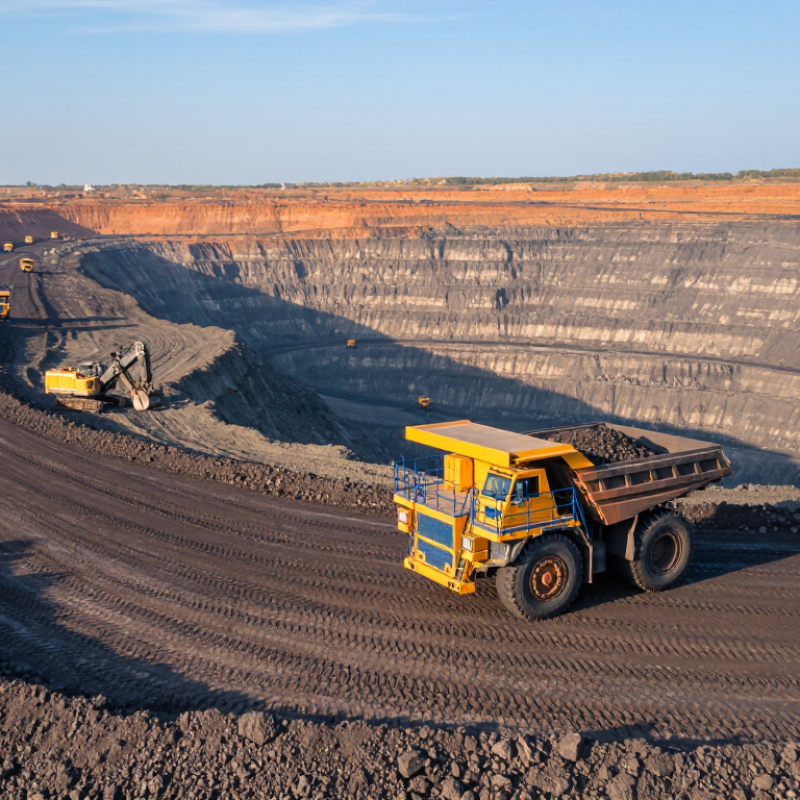
A 400-tonne payload is a practical benchmark for defining China’s largest-class mining dump truck. It describes the material carried per trip, not the truck’s total operating weight. At this scale, body volume, axle loads, braking capacity, and road conditions must work together. Numbers matter.
On a mine haul road, a loaded truck may face steep grades, loose rock, dust, and repeated braking. Buyers should compare payload with body capacity and the density of the site’s typical material. Also check turning radius, tyre availability, service access, fuel use, and cycle time. Rated payload alone cannot predict daily output. A tidy spreadsheet can miss uneven roads or loading habits; that deserves a second look.
Tips: Ask for verified payload and operating-weight figures, plus gradeability and braking data. Review the duty cycle with mine engineers. Request reference data from comparable sites, and clarify what is included in the sale.
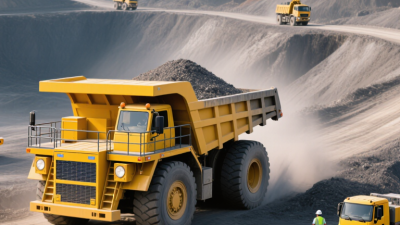
The XDE440’s 400-tonne payload and 660-tonne gross weight suggest a payload share of about 60.6%. That figure comes from dividing rated payload by gross vehicle weight. It is useful for comparison, but not a promise of daily output. Payload depends on material density, loading accuracy, road conditions, and operating limits.
Published ultra-class truck specifications offer context: one public specification lists a 363-tonne payload and 687.5-tonne gross operating weight. On the same simple calculation, its payload share is about 52.8%. The comparison highlights the XDE440’s stated capacity, though gross-weight definitions and test conditions may differ between specifications. A number on paper is not a mine-site result.
For buyers, the practical question is whether loaders, haul roads, tires, and dump points can support repeated 400-tonne loads. A 400-tonne payload means roughly 400 tonnes of material per full load, before considering spillage or partial loading. That is substantial. The 660-tonne gross figure also matters: bridges, ramps, and turning areas must be checked against actual operating weight. I would verify the current technical sheet and site-specific limits before treating these ratings as directly comparable.
A large mining dump truck advertised for sale in China needs more than an impressive payload figure. Its electric-drive system and haul-cycle results reveal how it may perform on a real mine road. In a typical diesel-electric layout, the engine powers a generator, while electric motors turn the wheels. This arrangement supports strong low-speed pulling and controlled speed changes under heavy loads. Details vary by configuration.
Pay attention to loaded and empty travel times, loading duration, dumping time, and queue delays. Together, these figures describe a full haul cycle. Measure them on the actual route, not just a smooth test road. A steep ramp, loose gravel, or wet surface can change travel speed and tire behavior. Record payload consistency, fuel use per tonne moved, and availability across several shifts. One fast cycle proves little.
Electric drive can offer smooth traction and reduce mechanical gear changes, but it does not remove operating limits. Heat, dust, road condition, and maintenance quality still matter. Ask for duty-cycle data that matches your route, including grade and distance. Compare the stated payload with measured loads. A tidy brochure may hide variation between shifts. There is no perfect number. Verify the figures before judging whether a truck is truly the largest or the right fit.
Largest Mining Dump Truck in China for Sale?
A large mining dump truck is not automatically the best choice for a mine. Match rated payload to the mine’s hourly output and expected operating hours. Then estimate the number of loaded trips needed per shift. A truck that is too small may create queues at the loading face. One that is too large can sit idle while the shovel fills it. Numbers matter.
Haul-road grades change the calculation. A steep, long climb can reduce loaded speed and increase strain on the powertrain, tires, and brakes. Measure the route, including its gradients, curves, surface condition, and distance. Use realistic cycle-time estimates, not just the best-case figures in a brochure. Actual road conditions can be less tidy.
The loading tool must also suit the truck. Compare bucket capacity with truck payload, and check how many passes fill the body without overloading it. Too many passes slow the cycle; too few can leave payload unused. Track real cycle times and payloads during a trial, then adjust the fleet plan. I would still treat early estimates cautiously; mine data often changes once operations begin.
Illustrative planning scenarios: estimated truck output is payload divided by assumed full-cycle time. Road grade is one factor in cycle time; actual results depend on route length, speed, payload, loading, dumping, and queuing.
Loader match shown as a five-pass estimate using an assumed bulk density of 2 tonnes per cubic metre: approximately 10, 15, and 22 m³ of effective bucket volume for the 100, 150, and 220 tonne payload scenarios. Verify material density, bucket fill, truck payload limits, and measured cycle times at the mine before selecting equipment.
When comparing the largest mining dump truck in China for sale, rated payload is only a starting point. Configuration determines whether that capacity works on your haul road. Check engine output, transmission, axle design, tyre size, body volume, and braking system against gradient, road width, and material density. A truck that looks suitable on paper may carry less once the body and payload limits are matched to the site.
Look closely at service support. Ask what routine inspections include, how quickly common parts can be supplied, and whether technicians can reach the mine. Downtime has a cost. Request a clear maintenance schedule and parts list, not just a broad service promise. If possible, review records from comparable operating conditions. A showroom demonstration tells you little about performance on a rough, loaded route.
Then estimate cost per tonne over the truck’s expected working life. Include purchase price, fuel, tyres, scheduled maintenance, repairs, and likely idle time. Divide those costs by realistic tonnes moved, using your own cycle times rather than optimistic estimates. Small assumptions matter. I would also test the calculation with lower availability and higher fuel use. The result may be less tidy, but it is more useful. Even a careful estimate can miss local operating realities.
Use this screening table to compare large rigid-frame mining haul trucks. Capacity bands and operating considerations are indicative industry ranges, not specifications for a particular truck or confirmation of current inventory. Verify every specification, price, and service commitment against the seller’s documentation and site conditions.
| Evaluation Dimension | Large-Class Configuration | Very-Large-Class Configuration | Ultra-Class Configuration | What to Verify Before Purchase |
|---|---|---|---|---|
| Indicative rated payload | Approximately 220–240 metric tonnes | Approximately 290–330 metric tonnes | Approximately 360–400 metric tonnes | Confirm the rated payload plate, allowable gross vehicle weight, and payload-monitoring limits. Do not treat a one-time overload as rated capacity. |
| Typical drivetrain options | Mechanical drive or diesel-electric drive, depending on the truck design | Mechanical drive or diesel-electric drive, depending on the truck design | Usually a specialized high-capacity configuration; drive system depends on the specific design | Compare drivetrain suitability for gradients, haul distance, ambient temperature, altitude, and the mine’s maintenance capabilities. |
| Power and gradeability | Engine and drive ratings vary by design; assess against the loaded route rather than engine power alone. | Higher installed power may be required as gross vehicle weight and route demands increase. | Requires route-specific assessment of power, cooling, braking, and sustained grade performance. | Request the manufacturer’s performance charts for the proposed gross weight, haul-road gradient, rolling resistance, and site altitude. |
| Loading-unit match | Match the truck body and payload to the shovel or loader bucket and the mine’s target passes per truck. | Check bucket payload, pass count, spotting time, and body compatibility. | Confirm that the loading fleet can fill the body efficiently without excessive payload variability. | Use actual bucket payload and material density. A truck that is too large for the loading unit can increase queueing and reduce fleet productivity. |
| Haul-road and operating fit | May suit established high-volume haul routes where road width and turning areas meet the truck’s dimensions. | Requires careful review of road width, curves, berms, gradients, dumping areas, and bridge limits. | Requires a site-specific infrastructure review; road geometry and ground conditions can constrain operation. | Verify overall dimensions, turning radius, axle or wheel loads, braking performance, tire clearance, and road-maintenance requirements. |
| Tires and consumables | Confirm tire size, load rating, approved operating speed, and local supply lead time. | Large tires can have long procurement lead times and require suitable handling equipment. | Confirm tire availability and replacement logistics before committing to the configuration. | Obtain tire-life assumptions for the actual haul-road conditions, plus prices, repair options, and delivery lead times. |
| Service support | Confirm field-service coverage, technician response times, training, and parts availability. | Check whether the seller can support major component repairs and planned maintenance at the mine. | Require a documented commissioning and long-term support plan, including critical spares. | Request a written service-level agreement covering response time, parts stocking, diagnostics, training, warranty exclusions, and escalation procedures. |
| Cost-per-tonne method | Cost per tonne = total operating cost over the period ÷ saleable tonnes hauled over the same period. | Include fuel or energy, tires, maintenance, labor, planned and unplanned downtime, support, and capital or rental cost. State whether costs are in USD or another currency. | ||
| Illustrative calculation only | Assumed payload: 360 t × 90% average payload factor = 324 t per loaded trip. At 2 completed trips per hour for 20 scheduled hours per day and 85% mechanical availability: 324 × 2 × 20 × 0.85 = 11,016 tonnes per day. | Divide the mine’s estimated daily truck cost by 11,016 tonnes to obtain an illustrative cost per tonne. The assumptions are examples, not measured performance or a supplier quotation. | ||
| Purchase decision | Compare delivered price, expected productive hours, payload utilization, fuel or energy use, service coverage, and lifecycle cost. | Request a site-specific total-cost model and verify the data using operating references, inspection records, component histories, and a contractual performance test. | ||
| A truck described as the “largest” is not automatically the lowest-cost choice. Select the configuration that delivers the required tonnes per hour safely and reliably on the mine’s actual haul circuit. | ||||