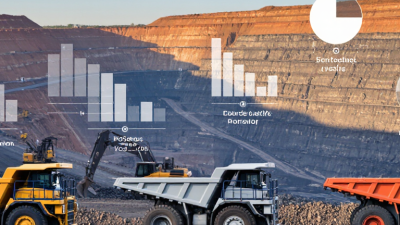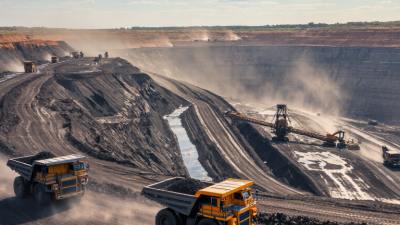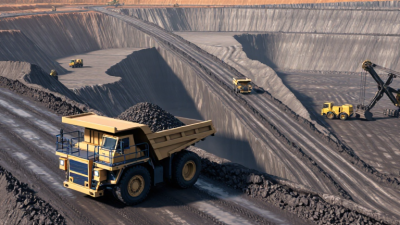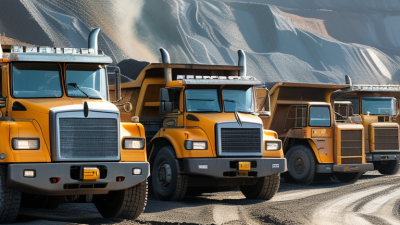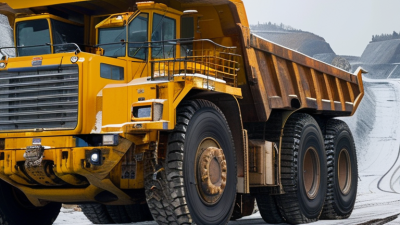
A Massive Mining Truck is not merely a large vehicle; it is a carefully engineered part of a mine’s production system. Caterpillar lists the 797F with a rated payload of 400 short tons, or about 363 metric tonnes. Komatsu’s 980E-5 also carries a 400-short-ton payload. Those figures describe capacity, not daily output. Actual performance depends on loading time, haul distance, road condition, gradients, and maintenance.
The truck’s cycle is simple to describe. A loader fills its body; the truck travels to a crusher or dump point, unloads, then returns for another load. The details are demanding. Massive tires press against rough haul roads, diesel-electric or mechanical systems move the load, and onboard controls help operators monitor speed, braking, and equipment condition. The Global Mining Guidelines Group’s mobile-equipment time-classification framework offers a useful way to assess operating time and delays. Small interruptions add up.
Mining engineer Jack de la Vergne’s Hard Rock Miner’s Handbook is a relevant technical reference on mine equipment and operating conditions. I cannot verify a verbatim truck-specific quotation from him, so I will not invent one. That matters: a truck’s headline payload can impress, but it cannot explain whether the machine suits a particular mine. This guide examines what defines a massive mining truck, how its systems work, and why road design, safe operation, and maintenance shape real productivity.
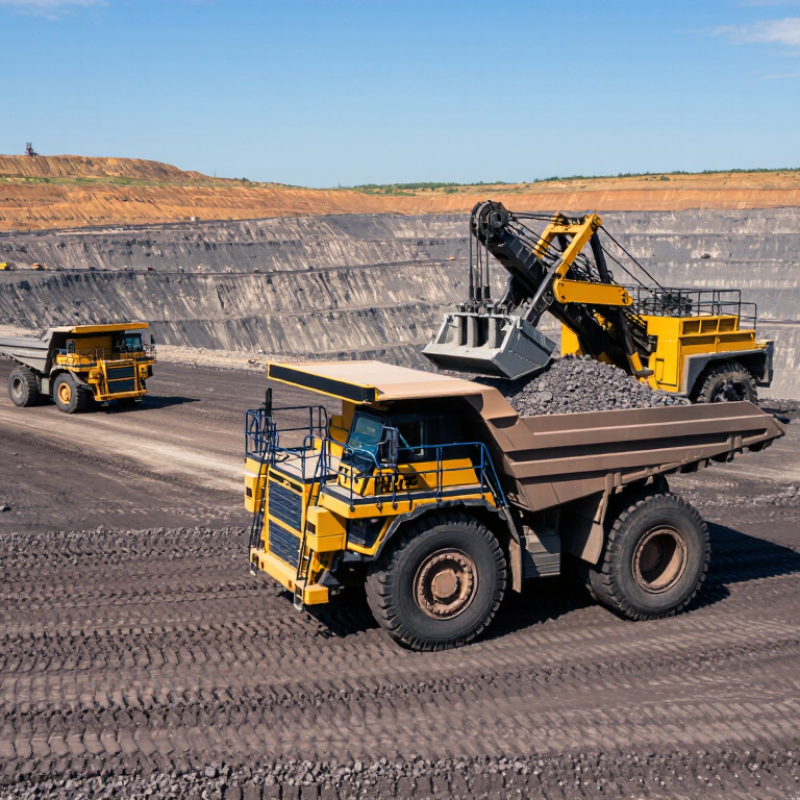
A massive mining truck is an off-highway vehicle built to move enormous loads across open-pit mine sites. Its definition is not perfectly fixed. In practice, mine engineers consider payload, operating weight, dimensions, and worksite conditions. Many massive trucks carry more than 100 metric tonnes in one trip. Some exceed 300 tonnes. Their rigid frames, oversized tires, and powerful braking systems support repeated hauling on steep, uneven roads.
The truck usually combines a large diesel engine with mechanical or electric drive systems. The engine produces energy for traction, hydraulic controls, cooling, and auxiliary equipment. A reinforced dump body lifts through hydraulic cylinders and releases material at the crusher or stockpile. Sensors monitor tire pressure, engine temperature, payload, and brake performance. This data helps maintenance teams find problems before a breakdown stops production. Still, technology is not magic. Dust, heat, vibration, and poor road conditions can reduce reliability quickly.
Tips: Inspect haul roads daily. Keep payloads within rated limits. Check brakes, tires, lights, and hydraulic leaks before each shift. Operators should also control speed on descents. A massive truck works best when the entire system is managed carefully, not when size alone becomes the goal. Even a powerful machine may perform poorly with weak maintenance, tired operators, or badly planned routes.
| Dimension | Typical Characteristics | What It Means in Operation |
|---|---|---|
| Definition | A very large, off-highway haul truck designed to move mined material around a mine site. | There is no single industry-wide payload threshold that defines “massive”; size and capacity vary by mine and application. |
| Payload capacity | Common large-class trucks carry roughly 150–400+ metric tonnes per load. | The rated payload is the material carried, not the truck’s total weight. Actual loads must stay within the truck’s rated limits. |
| Overall size | The largest classes can be around 13–15 m long, 7–9 m wide, and 6–8 m high; dimensions differ by design. | Their size affects road width, turning space, berm design, workshop access, and transport between sites. |
| Power and propulsion | Many use a diesel engine; some transmit power mechanically, while others use diesel-electric drive. Engine output varies by model and class. | In a diesel-electric system, the engine drives a generator, and electric motors provide traction at the wheels. |
| Loading and haul cycle | A typical cycle is loading, travelling to a dump point or processing area, unloading, and returning for the next load. | Excavators or loaders fill the body. The truck then follows designated mine roads and unloads by raising its body with hydraulic systems. |
| Braking and downhill control | Heavy-duty service brakes are supported by retarding systems, which may use electric braking or other engine and transmission controls. | Retarding helps control speed on long descents and reduces reliance on the service brakes; safe operation depends on the truck and the mine’s procedures. |
| Tyres and suspension | The trucks use very large, specialized tyres and heavy-duty suspension designed for high loads and mine-road conditions. | Tyre condition, pressure, road surface, and load distribution affect traction, stability, heat, and wear. |
| Where they work | Primarily surface mines and quarries, where haul routes connect loading areas with dumps, stockpiles, or processing facilities. | They are built for controlled off-highway environments rather than ordinary public roads. |
| Key operating considerations | Payload management, road conditions, visibility, traffic separation, maintenance, and operator training. | These factors influence productivity and safety. Specific limits and procedures are set by the truck design and mine-site rules. |
Figures are indicative ranges for large mining trucks; actual dimensions, payload ratings, and systems vary by configuration and operating conditions.
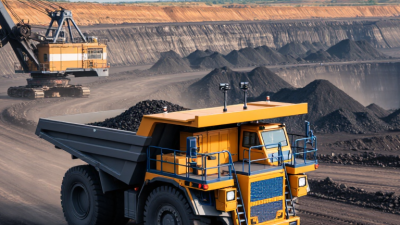
A massive mining truck is a mobile loading and hauling system built for steep, rough mine roads. Its diesel engine produces power for a generator or mechanical transmission. In electric-drive designs, the generator feeds traction motors inside the wheel hubs. These motors turn enormous tires with controlled torque. The frame carries the payload, while the dump body holds blasted rock or ore. Hydraulic cylinders raise the body during unloading.
The suspension absorbs impacts from uneven ground. Powerful service brakes slow the truck, while a retarder controls speed on long descents. Steering systems must respond accurately, even when the truck weighs hundreds of tonnes. Cooling systems protect the engine, generator, and hydraulic oil from excessive heat. Sensors monitor temperature, pressure, wheel speed, and payload. However, sensors can drift or fail. Operators still need judgment, especially when dust hides road damage.
Tips: Check tire condition, brake response, fluid levels, and warning signals before each shift. Keep loads balanced inside the body. Excess material near one side can increase suspension stress. Use controlled speed on downhill sections. A clean inspection record helps reveal small changes before they become expensive failures. Even advanced monitoring cannot replace careful observation.
A massive mining truck is a mobile loading system with wheels, a rigid frame, and a deep steel body. Large models commonly carry 100 to 400 metric tonnes, according to equipment data reviewed by Mining Technology in 2024. Their scale is difficult to picture. One tire can stand taller than a worker.
The truck moves through diesel-electric or mechanical drive systems. An engine creates power, while a transmission sends torque to the wheels. Some designs use electric motors at the wheel hubs. Hydraulic cylinders raise the body and release rock in seconds. Strong air or hydraulic brakes control the descent, but gravity remains the real challenge. Operators select low gears before entering a ramp. This protects the braking system from overheating.
The U.S. Geological Survey reported about 2.5 billion metric tonnes of global iron ore production in 2023. That volume explains why haulage efficiency matters. The U.S. Department of Energy’s Mining Industry Energy Bandwidth Study also identifies major savings potential through improved equipment efficiency. Yet reports often simplify real sites. Rain, loose ground, and poor loading angles can change performance sharply.
Tips: Keep the load centered and below the rated payload. Check tire pressure, brake temperature, and ramp gradients every shift. Avoid aggressive acceleration. It wastes fuel. Small mistakes become expensive quickly. A truck may carry more, but overloaded cycles can reduce tire life and increase stopping distance.
A massive mining truck may carry 200 to 400 tonnes across open-pit roads. Yet the operator often controls it through screens, joysticks, and radio systems. Cameras show blind zones around the cabin. Radar and proximity sensors detect nearby vehicles, people, berms, and changing road edges.
The operator watches speed, payload, engine temperature, tire pressure, fuel use, and braking performance in real time. A central fleet system also compares truck location with dispatch instructions. McKinsey’s 2020 analysis of autonomous mining suggested productivity improvements of 10–20% in suitable haulage operations. However, these gains depend on reliable roads, disciplined procedures, and accurate data. The International Council on Mining and Metals stresses that digital systems still require competent human oversight. Software can warn quickly. It cannot understand every unusual condition.
Tips: Keep camera lenses clean. Confirm sensor alerts before changing direction. Use slow speeds near loading zones. Record repeated warnings for maintenance review.
A typical shift includes pre-start inspections, radio checks, and fatigue monitoring. Operators may acknowledge alarms, adjust routes, or stop the truck remotely when conditions deteriorate. Weather creates difficult details. Dust can hide a berm, while rain changes braking distance within minutes. The system may still display green. That does not always mean the road is safe.
A 2023 Global Mining Guidelines Group guidance document recommends clear roles between operators, supervisors, and automated controls. That separation prevents confusion during abnormal events. The human-machine interface is improving, but it remains imperfect. Workers should question unusual readings instead of trusting a clean dashboard blindly.
A massive mining truck moves ore across rough haul roads, but its size makes safe operation a daily discipline. Before a shift, the operator checks tires for cuts, loose debris, and unusual heat. They also test brakes, steering, lights, mirrors, and the backup alarm. A small defect can become serious when a loaded truck travels downhill. The cab must stay clean enough for clear sightlines, and seat belts should be worn every trip. No shortcuts here.
Good maintenance depends on more than scheduled servicing. Technicians inspect suspension parts, hydraulic lines, filters, and fluid levels, looking for leaks or fresh wear. After a dusty shift, blocked air filters can reduce performance and raise engine temperatures. Service records help crews spot repeated faults, though rushed notes can miss useful details. That part deserves more care. Repairs should follow site procedures, and equipment should remain out of service until qualified staff confirm it is safe.
Tips: Keep a simple walk-around routine. Use the same route each time, and report changes immediately. Watch for wet patches beneath the truck, cracked tire surfaces, or warning lights that stay on. Clear radio calls help prevent confusion at loading areas and blind corners. Never assume another worker has seen you. Even experienced crews can miss something when shifts are long, so pause when conditions feel uncertain.