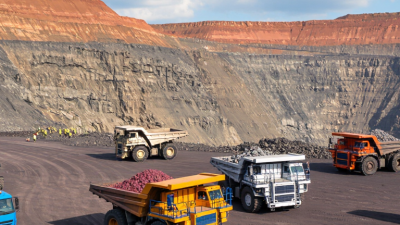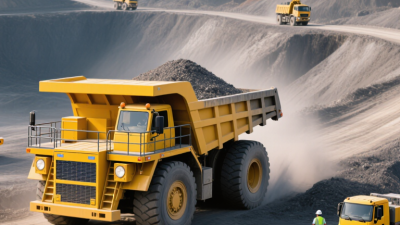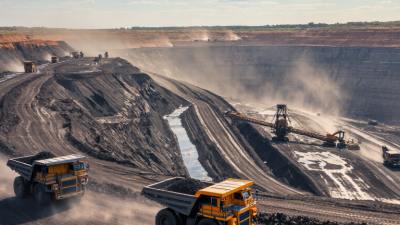
A Massive Mining Truck is more than a giant machine. It is a moving production system, built to carry hundreds of tonnes across rough, dusty mine roads. This guide compares ten of the world’s largest trucks, while looking beyond headline payload figures to power, dimensions, drive systems, and practical operating demands.
Manufacturer specifications provide a useful starting point. BelAZ lists the 75710 at a rated payload of 450 metric tonnes; Caterpillar’s 797F and Komatsu’s 980E-5 are each rated at about 363 tonnes. These figures come from published product data, not a single independent ranking. Conditions matter. Payload ratings, truck configurations, road quality, and site practices can all affect real-world performance. ICMM’s Mining Principles and related performance expectations also underline why productivity should be considered alongside safety and responsible operations.
Size is only part of the story. As a paraphrased takeaway from University of Queensland mining engineer Professor Peter Knights’s work on mining productivity: “A truck’s value is measured in safe, reliable tonnes moved—not payload alone.” That distinction shapes this list. Expect close comparisons, useful specifications, and a few caveats where “biggest” depends on the measure used. The numbers are impressive. The operating context matters more.
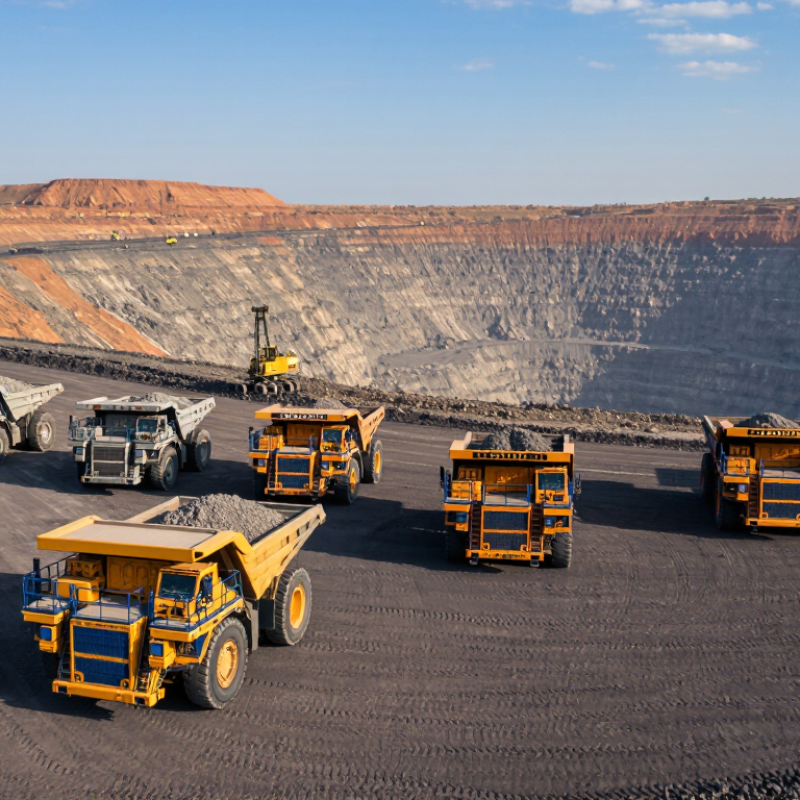
A mining truck’s size is not defined by its length alone. Its payload capacity, empty operating weight, height, and overall width all matter. Payload describes the material it can carry, while operating weight includes the truck itself, fuel, and equipment. Those figures are not interchangeable. Specifications can also differ by configuration, so comparisons need consistent measurements.
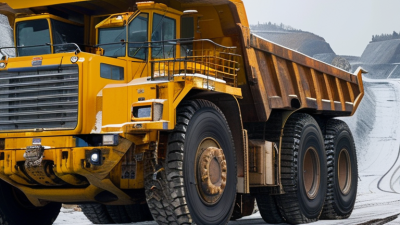
Look at the wheels and frame. Some tires stand taller than a person, and the loaded frame must withstand repeated jolts on rough haul roads. A huge body needs a powerful drive system, reliable braking, and room to turn. The mine must also provide suitable roads, loading equipment, and maintenance space. Scale brings practical demands.
There is a catch. A truck with a greater payload may not be the tallest or longest, and a lighter vehicle can still look enormous beside a worker. Rankings depend on which measure they use. For a fair comparison, check payload, dimensions, and operating weight together. Then consider the working conditions. Dust, steep grades, and long shifts can make raw size less meaningful than expected. A neat top-ten list may simplify a complicated machine.
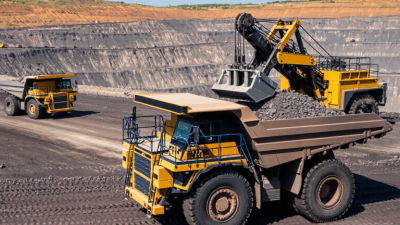
An ultra-large mining truck is built for repeated stress, not one dramatic haul. Its frame uses deep, reinforced sections to resist bending as ore shifts across uneven ground. The body is shaped to spread material rather than concentrate it at one point. That detail matters. A lopsided load can strain the frame and make steering less predictable.
The wheels, suspension, and braking systems must manage enormous forces together. Large tires flex slightly over rough haul roads, but heat buildup limits how hard and how long they can work. Heavy-duty suspension components absorb impacts from rock ridges and potholes. Retarding systems help control speed on long descents, reducing reliance on service brakes. Cooling systems also matter because engines and hydraulic equipment work under sustained demand.
Design is a series of trade-offs. A stronger frame adds mass, which can reduce the payload available for each trip. More capacity is not automatically better. Engineers must also consider visibility, access for maintenance, and how loads change during a shift. Even careful calculations cannot make every road surface predictable. That uncertainty is easy to underestimate.
Ten of the world’s most massive mining trucks are defined by more than their towering bodies. Published technical specifications collated by Mining Technology show that top-capacity rigid haul trucks can carry roughly 220 to 400 metric tonnes, depending on model and configuration. Some exceed 600 tonnes when loaded. Their tires can stand taller than a person, while deep tray walls keep blasted rock from spilling on rough haul roads. Huge, but not nimble.
Comparing ten trucks fairly means checking payload, gross vehicle weight, body volume, and operating conditions—not just height. Industry specification sheets show why: two trucks with similar payload ratings may have different body capacities or weight limits. A reported maximum is not a promise of everyday output. Rock density, road grade, weather, and loading accuracy all affect each cycle. I would also question rankings that mix short tons with metric tonnes; that small detail can distort a comparison.
Tips
Check the unit and rating basis before comparing figures. Match the truck to the mine’s haul distance, road width, and material density. A larger payload may look efficient on paper, but poor road conditions can slow every trip. Keep a little skepticism in the spreadsheet.
Comparing the world’s ten largest mining trucks means looking beyond their names or headline figures. The biggest models are rated to carry roughly 350 to 400 metric tonnes, while other ultra-class trucks commonly fall closer to 220 to 300 tonnes. Those numbers describe rated payload, not what every truck carries on every trip. Payload limits depend on the machine’s configuration and operating conditions.
Their scale is striking in person. Some haul trucks measure about 14 to 15 metres long and stand roughly 7 to 8 metres high. A wheel can approach four metres in diameter, making a person beside it seem very small. Exact dimensions vary, and measuring a truck body, canopy, or raised equipment can change the comparison. The figures are useful, but not perfectly uniform.
Payload capacity alone does not decide which truck moves more material efficiently. A lighter load of dense rock can weigh as much as a fuller load of softer material. Body volume, road gradients, tyre condition, and loading practice all affect real output. That sounds simple. It isn’t. A truck with a larger rating may also need wider roads and more demanding maintenance, details that are easy to overlook in a size comparison.
The world’s largest mining trucks work in open-pit mines, where wide benches and long haul roads give their size a practical purpose. They carry blasted rock from loading areas to crushers, stockpiles, or waste dumps. The routes can stretch for several kilometers, with steep grades, loose gravel, and clouds of dust. Conditions change quickly.
Operations start before the truck moves. Crews inspect tires, brakes, lights, cameras, and fluid levels, while maintenance teams check for leaks or damage. A trained operator climbs into the cab, reviews the route, and communicates with dispatch by radio. Loading machines place material into the truck’s body, and the operator follows site speed limits and traffic rules on the way to the dump point. No rushed turn is worth a rollover.
These trucks usually run in shifts, sometimes around the clock. Dispatch systems help coordinate traffic and reduce waiting, but operators still need to judge visibility, road conditions, and the behavior of nearby equipment. Heat can build inside tires, and rain may make a familiar ramp slippery. Small details matter. Even a careful plan can miss a sudden road repair or a change in the ore face. That gap between schedule and real conditions is worth respecting.
| Rank | Truck | Rated Payload | Approx. Gross Vehicle Weight | Approx. Engine Output | Typical Worksites | How It Is Operated |
|---|---|---|---|---|---|---|
| 1 | Ultra-class haul truck | 450 tonnes | 810 tonnes | 3,430 kW | Large open-pit iron ore and copper mines | A trained operator drives between the loading area and dump point. The truck uses a dedicated haul road and unloads by raising its dump body. |
| 2 | Ultra-class AC-drive haul truck | 372 tonnes | Approx. 624 tonnes | Approx. 2,610 kW | Deep open-pit mines with long, steep haul routes | An electric-drive system helps control wheel torque and speed. Operators follow mine dispatch instructions and observe speed limits on grades. |
| 3 | Ultra-class mechanical-drive haul truck | 363 tonnes | Approx. 688 tonnes | Approx. 2,983 kW | Large surface mines moving waste rock, coal, or ore | The truck follows a repeated load–haul–dump cycle. Operators use the retarder and service brakes as specified for each descent. |
| 4 | Ultra-class electric-drive haul truck | 363 tonnes | Approx. 625 tonnes | Approx. 2,610 kW | High-volume open-pit operations, including copper and iron ore mines | Electric traction motors drive the wheels. A mine control room may coordinate its route, loading queue, and cycle times. |
| 5 | Ultra-class haul truck | 363 tonnes | Approx. 661 tonnes | Approx. 3,000 kW | Large mines where high payloads and long haul cycles are required | The operator positions the truck under a loading shovel, then carries the load to a crusher, stockpile, or waste dump. |
| 6 | Large AC-drive haul truck | 313 tonnes | Approx. 570 tonnes | Approx. 2,535 kW | Large open-pit mines with established haul-road networks | Operators use onboard monitoring systems and radio dispatch to manage loading, travel, and dumping safely. |
| 7 | Large AC-drive haul truck | 296 tonnes | Approx. 500 tonnes | Approx. 2,125 kW | Open-pit coal, copper, and other bulk-mineral mines | The truck is loaded by a shovel or excavator and travels on graded mine roads. Payload monitoring helps prevent overloading. |
| 8 | Large electric-drive haul truck | 290 tonnes | Approx. 504 tonnes | Approx. 2,014 kW | Large surface mines with long-distance material haulage | Electric wheel motors provide traction. Drivers use designated pull-outs and follow right-of-way rules around smaller vehicles. |
| 9 | Large mechanical-drive haul truck | 227 tonnes | Approx. 386 tonnes | Approx. 1,976 kW | Open-pit mines and large quarries | The operator completes repeated shovel-to-dump cycles, checking mirrors, cameras, and blind-spot procedures when maneuvering. |
| 10 | Large electric-drive haul truck | 218 tonnes | Approx. 386 tonnes | Approx. 1,864 kW | Surface mines and quarries with high daily material movement | Mine dispatch assigns destinations and loading points. Operators maintain safe spacing and dump only on approved, stable surfaces. |
Specifications are approximate published ratings for representative trucks in each payload class. Actual figures vary by configuration, operating conditions, and payload policy.