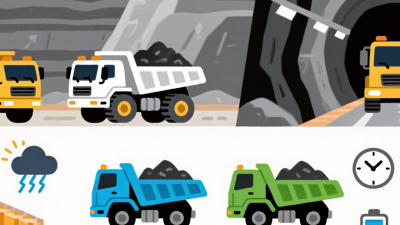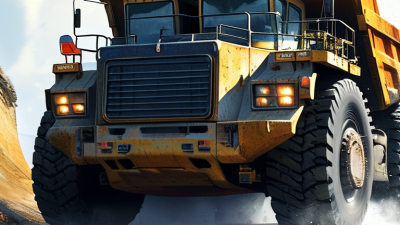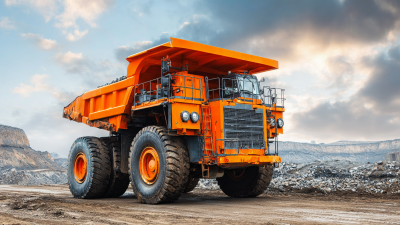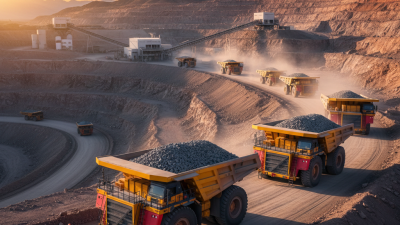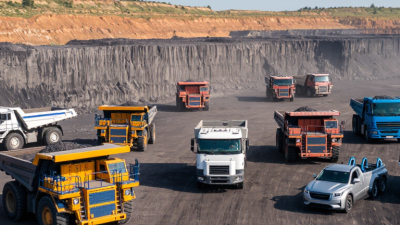
Coal Mine Trucks operate in some of the harshest working conditions in heavy industry. They carry overburden and coal across steep ramps, dusty haul roads, and changing weather. Their size matters, but size alone does not determine performance. Payload capacity, traction, braking, visibility, and access to maintenance support all affect daily productivity.
This guide explores 10 coal mine truck manufacturers worldwide and the capabilities that distinguish their equipment. It considers vehicle design, operating efficiency, durability, and the support systems available to mining operations. These factors can help buyers compare options, but no single manufacturer suits every site. A truck that performs well on a wide, dry haul road may be less practical on narrow or muddy routes. Details matter.
The comparison also requires some caution. Manufacturer specifications provide a useful starting point, yet real operating results depend on local conditions, maintenance practices, and operator training. Buyers should verify current models, service coverage, and technical data directly with manufacturers. This article offers a structured overview, not a substitute for site-specific engineering or procurement advice. Even experienced teams can overlook small differences. That is worth remembering.
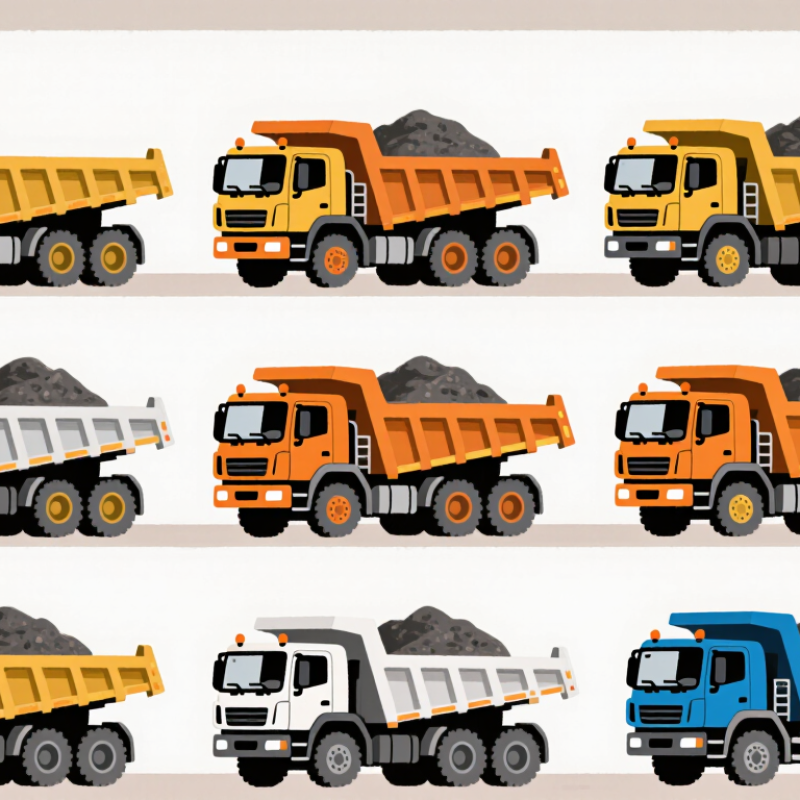
Coal mine trucks vary with the route they must travel. Large rigid-frame haul trucks move coal and overburden along broad, engineered surface roads. Articulated trucks can handle uneven ground and tighter turning areas, though their payloads may be lower. Underground operations use compact, low-profile haulage vehicles where roof clearance and tunnel width limit equipment size. Fit matters.
Capacity is only one measure of performance. Planners also consider gradients, road condition, turning radius, braking, tire heat, and loading equipment. On a wet ramp, traction and controlled speed may matter more than peak payload. Payload monitoring can help prevent overloading, while regular checks of tires, brakes, and cooling systems reduce avoidable downtime. Small issues grow.
These trucks connect the loading face with stockpiles, preparation plants, or transfer points. Their cycle time depends on loading, travel, dumping, and return—not speed alone. Dispatch teams can coordinate truck movements, but congestion at a shovel or dump point still disrupts the plan. A bigger truck is not always better: roads, maintenance capacity, and loading tools must support it. Even a well-matched fleet needs careful route upkeep, and dust or poor visibility can slow work unexpectedly.
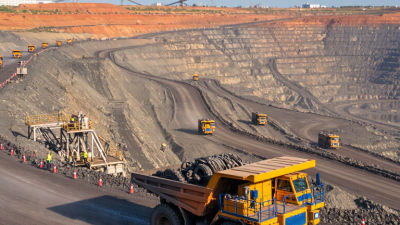
A credible Top 10 coal mine truck list should measure performance, not advertising claims. Start with payload accuracy, fuel consumption, brake control, and service availability. A truck carrying 220 tonnes may appear productive, yet poor road conditions can reduce its real output sharply. Compare verified cycle times from similar mines, not showroom estimates.
Safety deserves greater weight. The U.S. Mine Safety and Health Administration recorded 40 mining fatalities in 2023, including 16 in coal mining. This figure supports careful checks of collision systems, operator visibility, emergency braking, and maintenance access. The ICMM Mining Principles also emphasize risk management, worker safety, and transparent performance reporting. Ask manufacturers for independent test records, failure-rate data, and documented field experience. A polished brochure is not evidence.
Tips: Inspect a working unit, not only a presentation model. Track payload variance, tire temperature, brake response, and unscheduled downtime during a full shift. Request total-cost estimates covering parts, training, software, energy, and five-year maintenance. The International Energy Agency’s Energy Technology Perspectives highlights the growing importance of efficiency and emissions control in heavy industry. Still, efficiency numbers can mislead. A smaller engine may save fuel, but it may also struggle on steep ramps. Leave room for doubt, and require local operating data before ranking any manufacturer.
| No. | Evaluation Dimension | Suggested Weight | What to Measure | Practical Industry Benchmark | Evidence to Request |
|---|---|---|---|---|---|
| 01 | Payload and Truck Class | 15% | Rated payload, gross vehicle weight, body capacity, and suitability for the mine haul profile. | Common rigid mining-truck classes range from approximately 30 to more than 300 metric tonnes of rated payload. Select capacity according to road width, loading equipment, and production target. | Certified payload sheet, load-factor guidance, body-volume calculation, and weight-management documentation. |
| 02 | Powertrain and Gradeability | 13% | Engine or electric-drive output, continuous tractive effort, maximum sustained grade, and speed under load. | A credible specification should state both peak power and continuous performance. Haul-road grade, altitude, rolling resistance, and payload must be included in gradeability calculations. | Engine or motor data, grade-speed curves, altitude derating chart, and verified test results under loaded conditions. |
| 03 | Fuel or Energy Efficiency | 12% | Fuel consumption or energy use per operating hour and per tonne-kilometre. | Use a duty-cycle comparison rather than an unloaded test. The calculation should include payload, average speed, queue time, road gradient, and idle time. | Standardized duty-cycle report, telematics sample, fuel or energy records, and assumptions used in the calculation. |
| 04 | Reliability and Availability | 12% | Mechanical availability, mean time between failures, mean time to repair, and planned-maintenance hours. | A supplier should provide site-based fleet evidence. Availability figures are meaningful only when the measurement period, operating hours, exclusions, and maintenance policy are clearly defined. | Anonymized fleet records, component life data, warranty statistics, and maintenance-history examples from comparable mines. |
| 05 | Braking and Safety Systems | 12% | Service brakes, secondary braking, parking brake, retarder performance, emergency systems, and stopping distance. | The truck should be engineered and tested against applicable heavy mobile-equipment requirements, including ISO 3450 where relevant. Brake performance must reflect the maximum operating weight and steepest haul-road grade. | Brake-test certificates, retarder curves, emergency-stop procedures, risk assessments, and applicable conformity documentation. |
| 06 | Structural Protection and Operator Safety | 10% | ROPS/FOPS protection, visibility, collision avoidance, access systems, fatigue controls, and cab ergonomics. | Request certification to applicable ROPS/FOPS requirements, such as ISO 3471 and ISO 3449 where applicable. Visibility systems should address blind zones around the complete truck. | ROPS/FOPS certificates, visibility study, camera and radar specifications, access inspection, and operator-risk assessment. |
| 07 | Haul-Road Compatibility | 8% | Turning radius, overall dimensions, axle loading, ground clearance, tire size, and road-width requirements. | The selected truck must match the mine’s road geometry and geotechnical limits. Turning radius and axle loads should be checked against the narrowest road sections, bridges, ramps, and dump areas. | Dimensional drawings, axle-load data, turning-circle diagram, tire-loading tables, and site compatibility study. |
| 08 | Service Network and Parts Support | 7% | Local technician coverage, parts lead time, field-service capacity, training, and diagnostic support. | Critical components should have a documented replenishment plan, local or regional technical support, and defined response times for major failures. | Parts availability agreement, service-level agreement, technician qualifications, training plan, and recommended critical-spares list. |
| 09 | Automation and Fleet Management | 6% | Payload monitoring, machine health data, dispatch integration, geofencing, operator-assistance functions, and cybersecurity controls. | A mature system should provide reliable data export, event alerts, maintenance diagnostics, and compatibility with the mine’s fleet-management platform. | Demonstration account, data-interface documentation, cybersecurity policy, uptime records, and implementation requirements. |
| 10 | Total Cost of Ownership and Sustainability | 5% | Purchase price, energy, tires, maintenance, consumables, downtime, residual value, emissions, and end-of-life costs. | Compare lifecycle cost over a defined operating period, typically using cost per operating hour or cost per tonne hauled. Surface and underground applications require different emissions and ventilation assumptions. | Five- to ten-year TCO model, warranty terms, consumption assumptions, emissions data, residual-value estimate, and disposal or recycling plan. |
| Total Evaluation Weight | 100% | Use documented, comparable evidence and score each supplier against the same mine-specific duty cycle. | |||
Ten leading coal mine truck manufacturers worldwide are best compared by payload, uptime, service reach, and performance on haul roads—not by headline capacity alone. There is no single audited global ranking, so “leading” should describe proven capability rather than a fixed order. The International Energy Agency reported that global coal demand reached about 8.7 billion tonnes in 2023. That scale makes dependable haulage essential, especially where steep gradients, dust, and long shifts test every component.
A useful shortlist covers manufacturers with large rigid-frame trucks, regional parts support, and experience matching fleets to specific mine conditions. Compare rated payload with real-world cycle times and fuel use. Ask for maintenance intervals, tire availability, and local technician coverage. A truck that looks efficient on paper may lose hours waiting for parts. Rankings can also overlook smaller regional suppliers; that deserves a second look.
Tips: Check payload records from comparable sites, not brochure figures. Inspect the cab, steps, and service points in person. Ask operators what fails most often. The answer may be less tidy than a sales sheet, but more useful.
Comparison of established nominal payload classes used by major surface coal-mining haul-truck manufacturers worldwide.
The chart uses representative published payload ratings, rounded to metric tonnes. Actual truck configurations vary by model, payload policy, mine conditions, and regional operating requirements.
Top 10 Coal Mine Truck Manufacturers Worldwide: Truck Models, Payload Classes, and Key Technologies
Coal mine trucks are selected for the work they must perform, not just their headline payload. Smaller rigid-frame models can suit narrow haul roads and shorter routes. Large-capacity trucks carry more material per trip, but need wider roads, suitable loading equipment, and careful traffic planning. Payload classes vary by manufacturer and configuration, so published figures should be checked against the exact machine specification. A truck that looks efficient on paper may be poorly matched to a mine’s gradients or turning areas.
Key technologies affect productivity and operating costs. Electric-drive systems can provide smooth traction and controlled speed on steep ramps. Retarders help manage downhill travel, while onboard payload monitoring can reduce uneven loading and unnecessary strain. Tire-pressure monitoring and camera systems may also help crews spot developing issues. Still, sensors need calibration, and technology cannot replace inspections. Dust, vibration, and rough ground take their toll.
Tips: Compare payload with route length, slope, road width, and loading capacity. Check tire availability, service access, and operator visibility before choosing a model. Ask how payload data is verified. Small details matter. Mine conditions change, and an ideal specification can prove less ideal after a wet season or a change in production targets.
A mine truck that performs well on a dry, level haul road may struggle on steep, muddy ramps. That is why mine operators compare trucks against their actual routes, not just published payload figures. They assess gradient, road width, turning space, daily travel distance, and the condition of the running surface. A narrow pit may favor a smaller truck that can maneuver safely, while a large operation with long, well-maintained roads may benefit from higher capacity.
Climate and maintenance access matter too. In cold regions, starting reliability and traction deserve close attention. In hot, dusty pits, cooling performance and filtration can affect uptime. Operators also examine tire availability, fuel use, service support, and the skills of the maintenance crew. A truck’s rated capacity is only useful when roads, loading equipment, and operating procedures can support it. The best choice is rarely obvious. Real site data can be incomplete, and early estimates sometimes need revision.
Tips: Map the steepest haul segment, not just the average grade. Check turning clearances at loading and dumping points. Track fuel use and downtime during a trial period, then compare results across shifts. Ask operators what feels difficult; their feedback may reveal issues the spreadsheet missed.