2026 How to Choose Mining Transport Vehicles?
Choosing Mining Transport Vehicles in 2026 demands more than comparing payload figures. A haul truck that performs well in an open pit may struggle in narrow underground headings. Fleet decisions should reflect geology, road gradients, cycle distances, weather, ventilation, and loading equipment. Start with the complete duty cycle. Measure real travel times, not brochure estimates. A short test route can reveal tire wear, braking strain, and operator visibility problems. Small details matter.
This guide examines diesel, electric, hybrid, and specialized transport options through practical mine-planning criteria. Payload must match the excavator and road design without exceeding safe limits. Battery vehicles can reduce underground heat and ventilation demand, yet charging time may reshape production schedules. Diesel units offer flexibility, but fuel use, emissions, and maintenance exposure require careful calculation. Consider certified safety systems, rollover protection, braking performance, lighting, cameras, and emergency communication. Reliable support is equally important. Parts availability, technician training, warranty terms, and service response can determine whether a vehicle earns revenue or waits idle.
Experience also teaches caution. No machine wins everywhere. A lower purchase price may hide higher costs for tires, energy, downtime, or road repairs. Advanced automation may exceed a site’s current skills and data quality. That assumption can fail. Recheck plans with operators, maintenance teams, and independent technical advisers. Their observations may challenge spreadsheets. This article provides a practical framework for comparing Mining Transport Vehicles in 2026, while recognizing that mine conditions change. The best choice is measurable, maintainable, and safe—not merely impressive in a sales presentation.
Types of Mining Transport Vehicles and Their Typical Applications
How to Choose Mining Transport Vehicles in 2026?
Mining transport vehicles must match the working environment, not just the required payload.
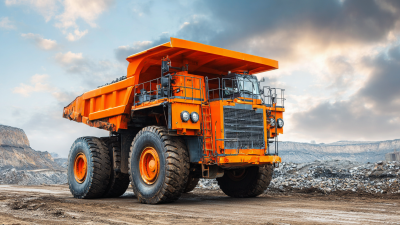
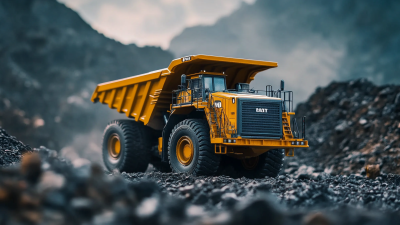
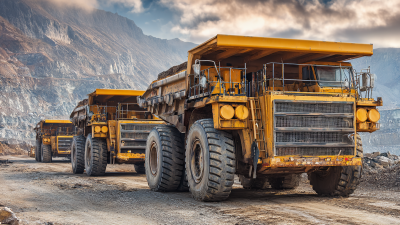
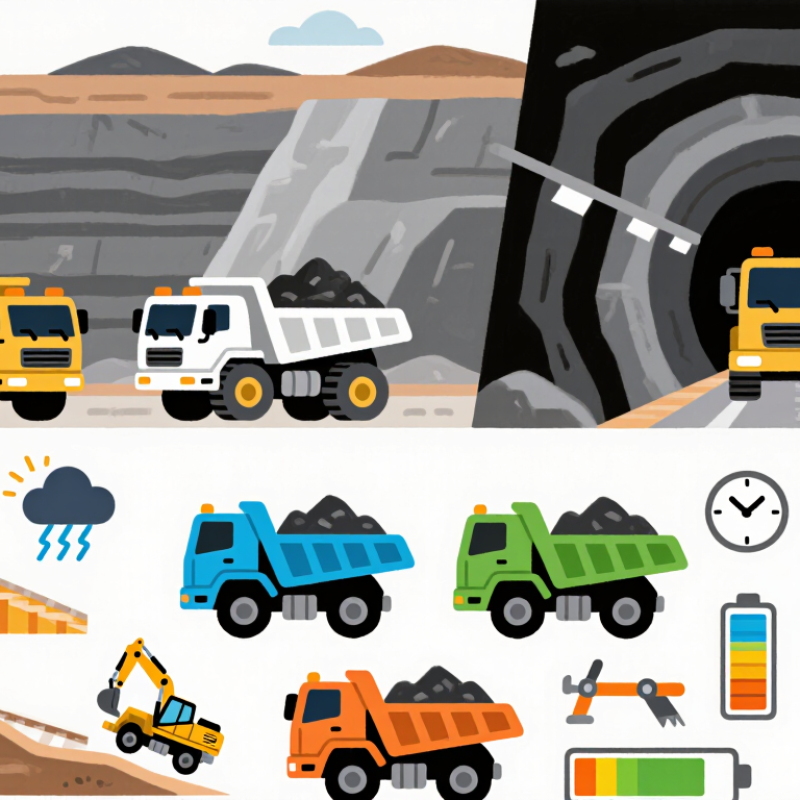
Underground mines commonly use load-haul-dump vehicles for short loading and hauling cycles. Their compact frames improve turning in narrow drifts. Articulated dump trucks suit uneven haul roads and steep gradients in open-pit operations. Rigid haul trucks work better on long, prepared routes with high daily tonnage. Water trucks control dust, while service vehicles carry fuel, tools, and maintenance crews.
The International Energy Agency reported that lithium demand grew by nearly 30% in 2023, driven by clean-energy technologies.
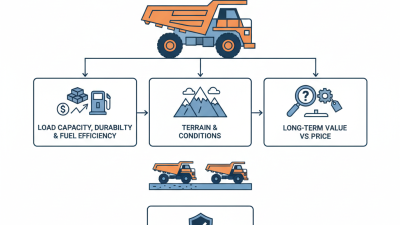
This pressure can increase mine output and transport intensity. Buyers should compare payload, cycle time, fuel or battery consumption, braking performance, tire life, and cabin visibility. Ventilation capacity is critical underground. A larger truck is not automatically better. In practice, poor road design can erase its productivity advantage.
I would also examine operator feedback, because a spreadsheet rarely shows vibration, blind corners, or mud buildup. Independent testing and maintenance records provide stronger evidence than sales claims.
Tips:
Measure the complete haul cycle, including loading, queuing, dumping, and return travel. Select vehicles with safety systems suited to the site’s actual risks. Review regional reports from the IEA and the International Council on Mining and Metals, then verify figures against site trials.
Allow room for mistakes. Weather changes everything. A vehicle performing well in dry-season tests may struggle after heavy rain.
Controls, spare-part access, and technician training should be assessed before purchase.
Key Performance Factors for Different Mining Conditions
2026 How to Choose Mining Transport Vehicles?
Key Performance Factors for Different Mining Conditions
Choosing a mining transport vehicle starts with the site, not the brochure.
Measure haul-road grades, surface strength, turning space, and daily travel distance. A vehicle with high payload may underperform on soft ground. Excessive weight can increase rutting and fuel use. Poor traction creates delays, especially after rain or blasting.
For steep ramps, evaluate torque, braking control, cooling capacity, and hill-start performance. Retarders and responsive service brakes help control downhill loads. Underground operations need compact dimensions, strong lighting, low exhaust impact, and a tight turning radius. Ground clearance matters on uneven floors. Open-pit sites usually demand larger payloads, durable suspension, dust protection, and stable handling at speed. Wet areas require sealed electrical connections and effective water management.
Do not judge capacity alone.
Match the powertrain to the actual load cycle, including empty returns and waiting time. Check tire access, inspection points, filter replacement, and spare-part availability before purchase. Maintenance design affects availability more than many buyers expect. A specification sheet can mislead. A vehicle may look efficient in testing but struggle on a steep, broken road. This is where field trials become valuable. Record cycle time, braking temperature, operator visibility, and fuel or energy use under normal conditions. Recheck the results after several shifts. Early assumptions are often wrong.
Safety, Maintenance, and Environmental Standards to Evaluate
2026 How to Choose Mining Transport Vehicles?
Safety begins with the vehicle’s working environment, not its brochure. Check braking performance, visibility, rollover protection, access steps, and emergency isolation systems. According to the International Labour Organization, mining employs about 1% of the global workforce but accounts for roughly 8% of fatal workplace accidents. That imbalance demands measurable controls. Require collision warnings, fatigue monitoring, and clear pedestrian separation. Test them during night shifts and heavy dust. Laboratory claims are not enough.
Maintenance records should show inspection dates, fault histories, tire wear, brake temperatures, and hydraulic leaks. The International Council on Mining and Metals reported 33 member-company fatalities in 2023, reminding operators that equipment systems and human decisions remain connected. Choose vehicles with accessible service points and diagnostic tools. Shorter repair time matters underground. So does training. A technically advanced vehicle can still become unsafe after poor maintenance.
Environmental standards need equal attention. Compare fuel consumption per tonne moved, exhaust emissions, noise, dust control, and energy use during idle periods. For electric vehicles, evaluate battery durability, charging safety, thermal monitoring, and end-of-life handling. ISO 14001 supports structured environmental management, while ISO 45001 guides occupational safety systems. These standards improve discipline, but they do not guarantee perfect performance. Mud, steep ramps, and rushed schedules still expose weaknesses. Sometimes, a simpler vehicle is safer.
A Step-by-Step Process for Selecting the Right Mining Vehicle
How to Choose Mining Transport Vehicles in 2026: A Step-by-Step Process
Start at the working face, not the sales office. Map the route, payload, gradients, turning radius, road width, and daily cycles. Measure real conditions during wet and dry shifts. A vehicle rated for 60 tonnes may perform poorly on a steep, poorly maintained ramp. Calculate payload utilization, cycle time, fuel or energy use, tire costs, and planned availability. The first estimate is often wrong. That is normal.
Safety should shape the shortlist. The U.S. Mine Safety and Health Administration recorded 40 mining fatalities in 2023, keeping powered haulage under serious scrutiny. Compare braking distance, visibility, collision-warning systems, cabin protection, and emergency access. Then review maintenance skill, spare-parts access, charging or refueling time, and ventilation requirements. A battery vehicle may reduce underground exhaust, but its charging schedule can disrupt production. According to the International Energy Agency’s Global Critical Minerals Outlook 2024, lithium demand could increase about ninefold by 2040 under stated policies. That supports careful energy planning, not automatic electrification. Test two or three operating scenarios with measured site data. I would also challenge optimistic productivity claims; dust, heat, operator fatigue, and delays rarely appear in brochures. Capture those inconvenient details before approving the fleet.