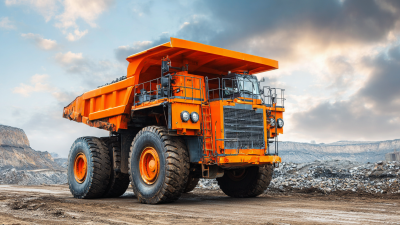
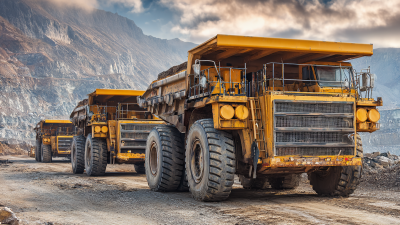
China Top Gold Mining Trucks for Sale How to Choose?
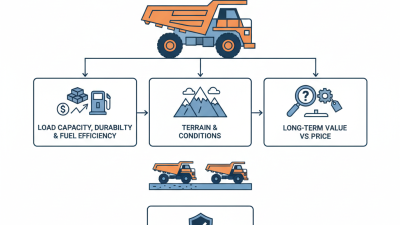
Choosing Gold Mining Trucks for sale in China requires more than comparing horsepower and purchase prices. A truck that looks powerful in a showroom may struggle on steep, wet haul roads. Buyers should examine payload, engine performance, braking systems, tire availability, fuel use, cabin visibility, and maintenance access. These details become important when a loaded truck travels six kilometers through dust, sharp bends, and changing grades.
Donald Fites, former Caterpillar chairman, said, “Safety is a value, not a priority.” That principle should guide every equipment decision. A reliable truck needs strong retarding control, stable handling, effective dust protection, and certified safety features. Operators should also request service records, component warranties, spare-parts plans, and references from comparable mines. Local technical support can matter more than a slightly lower quotation.
Look beyond the price tag. Calculate cost per ton, expected availability, tire replacement costs, and fuel consumption over several years. Electric or hybrid options may reduce emissions, but charging conditions and technician training require careful review. Not every mine needs the largest available model. Sometimes, a smaller truck delivers better road flexibility and lower operating costs. That is easy to overlook.
A practical inspection should include a loaded road test, brake evaluation, steering response, and underbody examination. Independent engineers can verify manufacturer claims and detect weak points. Still, no selection method is perfect. Mine conditions change, and forecasts can be wrong. The safest choice combines verified data, experienced operators, transparent suppliers, and a realistic understanding of daily production demands.
Define Gold-Mine Haul Needs: 60–400 t Payload and 8–12% Grades
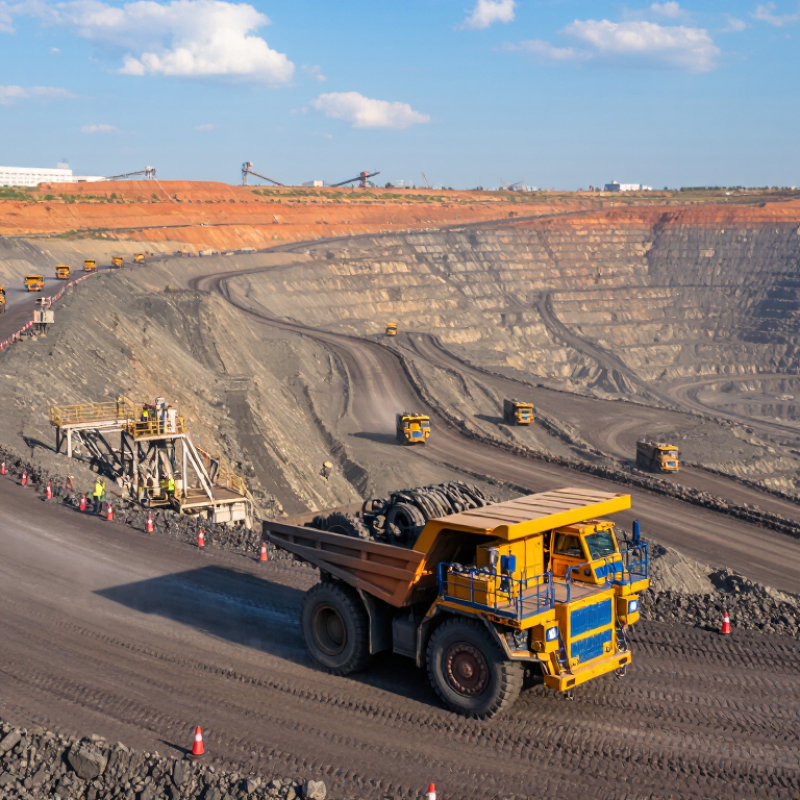
Choosing a gold-mine haul truck starts with the road, not the brochure. Define payload needs from 60 to 400 tonnes, then map the full haul cycle.
An 8–12% grade means a steep haul road, not ore quality. On a 400-tonne loaded truck, every extra climb demands stronger traction, cooling, braking, and retarding capacity.
The International Council on Mining and Metals reports that energy efficiency is a major mine-cost and emissions issue, making gradient control commercially important. The U.S. Department of Energy’s Mining Industry Energy Bandwidth Study also identifies material haulage as a major energy consumer.
Measure loading time, travel distance, elevation change, queue time, and return speed.
A 60-tonne truck may suit short benches, narrow ramps, or variable production. A 240–400-tonne unit needs wider roads, larger loading tools, stronger bridges, and disciplined traffic separation. Bigger is not automatically better.
Check the wet-season route. Mud can reduce effective payload and increase stopping distance.
Mine Safety and Health Administration data repeatedly links mobile-equipment risk with interaction, visibility, and control failures. That makes camera coverage, braking redundancy, access steps, and operator visibility practical selection criteria.
A common planning mistake is using maximum payload as the daily target. Real conditions rarely cooperate.
Recalculate with 8%, 10%, and 12% grades, then test fuel use, cycle output, tire loading, and brake temperatures.
The best choice may be smaller. Sometimes, it is.
Evaluate China Models: 60–90 t Rigid Trucks and 220–400 t Haulers
Choosing China gold mining trucks requires more than comparing purchase prices. Payload class changes the entire haulage plan. Rigid trucks carrying 60–90 tonnes suit narrower benches, shorter routes, and moderate production targets. Their simpler layout can reduce maneuvering space and loading delays. Measure the road width, turning radius, gradient, and average cycle time before selecting one.
For 220–400 tonne haulers, mine design becomes critical. These machines need wide haul roads, strong bridges, and loading tools with matching capacity. A full load can increase tire stress and braking demand quickly. Check retarder performance, emergency braking, frame strength, and suspension response on uneven ground. Do not trust brochure payload figures alone. Request verified fuel data from comparable duty cycles.
Look closely at operator visibility, cab protection, dust sealing, and service access. Small details matter during twelve-hour shifts. Parts availability and technician response often affect ownership costs more than the initial quote. Ask for maintenance records, component warranties, and local training support. A controlled site trial is valuable, although it may not represent every season or road condition. My own evaluation would remain cautious if test data excluded wet haul roads, empty returns, or partial loads. Those gaps can distort the real cost per tonne.
Calculate TCO Using Fuel, Tires, Maintenance, and 20,000+ Operating Hours
China Top Gold Mining Trucks for Sale: How to Choose?
For gold mining, a truck’s purchase price shows only part of its real cost. Calculate total cost of ownership across at least 20,000 operating hours. Record fuel use under loaded and empty cycles, not only the supplier’s laboratory figure. A 100-liter hourly difference can become millions in fuel expenses over several years.
Tires also deserve careful measurement. Track tread life, punctures, rotation costs, and replacement delays on actual haul roads. One damaged tire can stop a truck and interrupt an entire loading circuit. Maintenance records should include filters, fluids, brakes, suspension parts, and scheduled labor. Keep downtime visible. It is often more expensive than a repair invoice.
Our first estimate was too optimistic. We used average fuel consumption and ignored long uphill sections. The revised model used payload, cycle distance, road gradient, idle time, and seasonal conditions. Use this formula: TCO equals purchase cost, fuel, tires, maintenance, labor, and downtime, divided by productive hours. Check the figures monthly against workshop logs and fuel tickets. A cheaper truck may become expensive after 20,000 hours. A higher-priced option may perform better, but only when local service access and parts availability support that claim. Real operating data matters more than polished brochures.
China Top Gold Mining Trucks for Sale How to Choose? - Calculate TCO Using Fuel, Tires, Maintenance, and 20,000+ Operating Hours
Comparison basis: Indicative specifications for new, diesel-powered rigid dump trucks suitable for open-pit gold mining. The figures are planning estimates rather than quotations and should be verified against the mine's haul-road profile, payload policy, altitude, climate, duty cycle, and local service conditions.
| Truck Class |
Typical Mining Application |
Rated Payload
(metric tonnes) |
Purchase Price
(USD) |
Average Fuel Use
(L/hour) |
Fuel Price Assumption
(USD/L) |
Fuel Cost Over 20,000 Hours
(USD) |
Tire Budget Over 20,000 Hours
(USD) |
Maintenance Cost
(USD/hour) |
Maintenance Cost Over 20,000 Hours
(USD) |
Estimated TCO
(USD) |
TCO per Operating Hour
(USD/hour) |
TCO per Payload Tonne-Hour
(USD/t-hour) |
| 30-ton rigid dump truck |
Short- to medium-haul mine roads, waste removal, selective ore transport |
30 |
$260,000 |
18 |
$1.05 |
$378,000 |
$54,000 |
$9.00 |
$180,000 |
$872,000 |
$43.60 |
$1.45 |
| 40-ton rigid dump truck |
General open-pit haulage with moderate gradients and mixed ore-waste cycles |
40 |
$350,000 |
25 |
$1.05 |
$525,000 |
$75,000 |
$11.00 |
$220,000 |
$1,170,000 |
$58.50 |
$1.46 |
| 60-ton rigid dump truck |
High-volume ore and waste haulage on established mine roads |
60 |
$520,000 |
34 |
$1.05 |
$714,000 |
$126,000 |
$15.00 |
$300,000 |
$1,660,000 |
$83.00 |
$1.38 |
| 90-ton rigid dump truck |
Large-scale open-pit operations with long haul distances and high production targets |
90 |
$780,000 |
48 |
$1.05 |
$1,008,000 |
$180,000 |
$20.00 |
$400,000 |
$2,368,000 |
$118.40 |
$1.32 |
| Key Selection Insight |
The largest truck has the highest absolute TCO, but its lower estimated TCO per payload tonne-hour can improve unit-cost performance when road conditions, loading equipment, workshop capacity, and production volume support its use. |
Calculation notes: Estimated TCO = purchase price + fuel cost + tire budget + scheduled and unscheduled maintenance. Fuel cost is calculated as average fuel use × 20,000 operating hours × $1.05/L. Tire budgets represent the initial tire set plus expected replacements under abrasive mine-road conditions. Labor, financing, insurance, taxes, depreciation, lubrication, operator wages, unscheduled production losses, payload penalties, and resale value are excluded. Actual fuel consumption and component life vary with payload, speed, haul-road grade, rolling resistance, idling, ambient temperature, and maintenance quality.
Verify Safety and Support: ROPS/FOPS, ISO Standards, Parts, and Service
China Top Gold Mining Trucks for Sale: How to Choose?
A gold mine truck must protect people before it moves ore. Check the ROPS and FOPS structure for clear certification and machine-specific test records. ROPS helps protect the operator during a rollover. FOPS reduces risks from falling rocks and loose materials. Ask whether the cab design matches the truck’s actual payload and working conditions. A strong-looking frame is not enough.
Review ISO-related documents carefully. Confirm the exact standard, testing scope, issuing body, and production date. Check seat belts, braking systems, lights, mirrors, emergency controls, and fire protection equipment. During inspection, look for clean welds, secure guards, readable labels, and unrestricted visibility. Small defects matter. A dusty test yard may hide problems.
Parts and service support can decide the truck’s real cost. Request a list of fast-moving parts, delivery times, warranty terms, and service contacts. Confirm support for tires, filters, brake components, hydraulic hoses, and electrical controls. Ask for maintenance schedules in clear English. A local technician or remote diagnosis system can reduce downtime, but only if response times are written down. Do not rely on promises alone. I would also test a loaded truck on a rough route before purchase. That step can expose weak suspension, poor braking, or uncomfortable controls. Even careful buyers miss details. Recheck everything before signing.
Use this checklist when comparing gold mining trucks. The values represent the recommended minimum number of verification records to request in each area, not manufacturer performance claims. Confirm ROPS and FOPS certification, applicable ISO test reports, parts availability, warranty terms, maintenance documentation, operator training, and service response commitments before purchase.