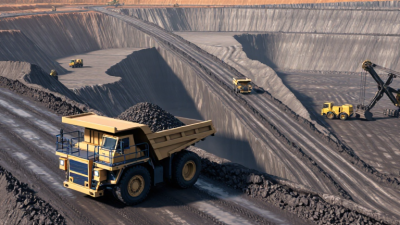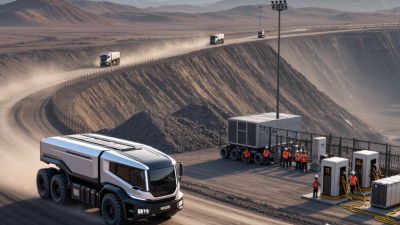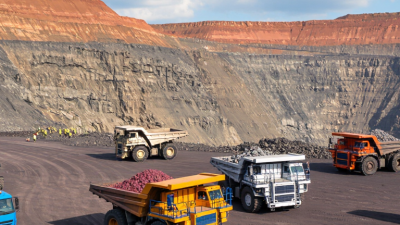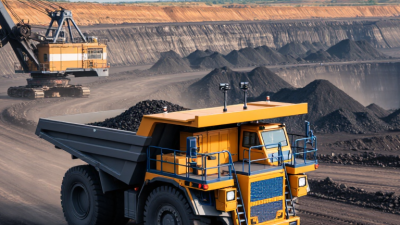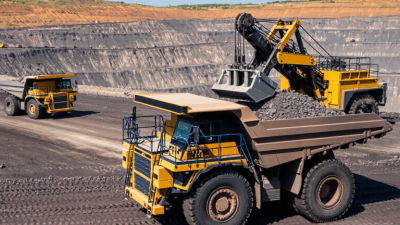
An Ev Mining Truck is a heavy-duty vehicle that carries ore, waste rock, or supplies through an active mine. Instead of relying on a diesel engine alone, it uses electric motors powered by onboard batteries. Some designs also use trolley lines on steep haul roads. The basic idea is simple. The engineering is not.
During a haul cycle, the truck accelerates under electric power, climbs loaded ramps, and descends toward a dump point. Regenerative braking can convert some downhill energy into electricity and return it to the battery. Charging may happen between shifts, during loading, or through battery swapping, depending on the truck and site. These choices affect schedules, equipment, and mine infrastructure. A charger beside a dusty service bay is not a small detail.
This article explains what an electric mining truck is and how its main systems work together. It also looks at practical factors such as payload, route length, gradients, battery temperature, charging access, and maintenance. A battery-powered truck does not automatically reduce every environmental impact; results depend partly on how its electricity is generated and how the mine operates. Comparisons also vary by site, so broad claims deserve a closer look. The technology is advancing, but choosing the right truck still requires careful, site-specific analysis.
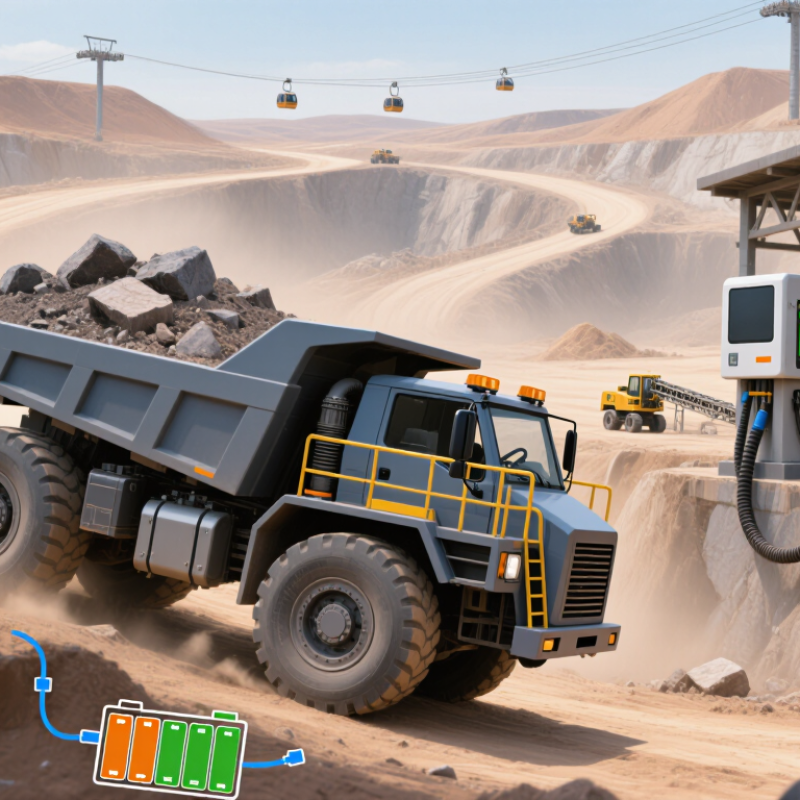
An electric mining truck is defined by its traction system: electric motors turn the wheels instead of a mechanical drivetrain. Power may come from onboard batteries or an overhead trolley line. A diesel-electric truck is different. Its wheels are electrically driven, but an onboard diesel engine still generates power, so it is not fully battery-electric.
Battery-electric models store energy onboard and recharge at a depot or during planned stops. Trolley-assisted trucks draw electricity from overhead cables on selected uphill routes, then use onboard power elsewhere. Regenerative braking can return some energy during downhill travel. The IEA’s Global EV Outlook 2024 reports nearly 14 million electric cars sold in 2023, around 18% of global car sales. That figure concerns cars, not mine trucks, but it shows how quickly electric drivetrains are expanding. For mines, range, payload, charging time, road gradients, and cold conditions all shape whether a truck works in practice. The limits can be easy to underestimate.
An electric mining truck relies on several systems working together, not just a large battery. The battery pack stores energy and sends direct current to an inverter, which controls power delivered to the traction motors. Those motors turn the wheels and provide strong low-speed torque, useful when a loaded truck climbs a ramp. Heat matters. Cooling circuits help manage temperatures in the battery, motors, and power electronics, especially during repeated uphill runs. Their performance depends on ambient conditions and workload, so a single operating figure rarely tells the whole story.
The chassis, suspension, and braking system must handle heavy payloads while protecting electrical components from dust, vibration, and water. Regenerative braking can return some energy to the battery as the truck slows or descends, but it does not replace mechanical brakes. A control system monitors battery charge, temperatures, motor output, and faults, then adjusts power or alerts the operator. Charging equipment and site planning matter too: cable reach, charging time, and shift patterns affect how much work a truck can complete. These details are easy to underestimate. A technically capable truck may still lose productivity if charging access is poorly placed or cooling needs are overlooked.
Typical electric traction-power path. Bar length shows the component’s position in the sequence, not its power, efficiency, or size.
The battery supplies electricity to the inverter, which controls power to the traction motor. The motor turns the driven wheels through reduction gearing or a final drive, depending on the truck design. During regenerative braking, the motor can act as a generator and return some energy to the battery.
An electric mining truck moves by converting stored electrical energy into wheel torque. Its battery supplies power to inverters, which regulate electricity for the traction motors. The motors turn the wheels through a drivetrain, carrying the truck along mine roads. The response is immediate. Carefully controlled torque helps the driver start smoothly, even with a heavy load or on a steep grade.
During a shift, the operator uses cab controls for acceleration, steering, and braking. Onboard systems monitor speed, battery temperature, motor load, and braking status. When the truck slows or travels downhill, regenerative braking can return some motion energy to the battery. It cannot recover everything. Friction brakes still matter for stopping and emergencies. Cameras, mirrors, and site procedures help operators manage blind spots around the large vehicle.
Before a run, crews check the truck’s condition and confirm its charge is suitable for the planned route. Charging may happen between shifts or during scheduled pauses, depending on site operations. Dust, gradients, and changing payloads all affect energy use, so estimates need regular review. A real shift is rarely as neat as a diagram. That practical uncertainty is one reason route planning and attentive operation remain essential.
An electric mining truck stores power in a high-voltage battery pack. During charging, electricity flows through onboard converters, while a battery management system monitors cell voltage and temperature. It adjusts charging current to protect the cells. Charging usually happens between shifts or during planned pauses, using high-power equipment at the mine. Some operations also use overhead power lines on haul roads, reducing battery draw on selected routes.
Power demand changes sharply across a shift. Climbing a loaded ramp draws heavily on the battery; descending can return some energy through regenerative braking. That recovery is limited when the battery is full, hot, or unable to accept charge. Fleet software can schedule charging around routes and shift changes, but charger capacity and grid limits still matter. Heat matters too. In practice, a charging plan may look neat on paper, then shift when weather or production changes.
The International Energy Agency’s Global EV Outlook 2024 reports that electric-vehicle battery demand reached about 750 GWh in 2023, up 40% from 2022. It also reports average battery-pack prices fell nearly 14% that year. These figures describe the wider EV market, not mining trucks specifically, but they show a fast-changing battery supply chain. A mine still needs site-specific tests: energy use depends on payload, grade, road conditions, and operating temperature. That uncertainty deserves more attention.
An electric mining truck uses a rechargeable battery and electric traction motors to move material. System designs and operating figures vary by truck size, mine layout, climate, and charging equipment; ranges below are illustrative rather than specifications for a particular vehicle.
| System or Dimension | How It Works | Typical Data or Operating Principle | Why It Matters |
|---|---|---|---|
| Traction battery | Stores electrical energy and supplies the traction system and other vehicle equipment. | Large mining vehicles can use battery packs with capacities of hundreds of kilowatt-hours or more. Capacity depends on payload, route, duty cycle, and vehicle design. | Battery capacity affects usable operating time, vehicle mass, charging needs, and the amount of energy available for a haul cycle. |
| Electric traction motors | Convert electrical energy into torque at the wheels or drive axles. An inverter controls the power delivered to the motors. | Electric motors provide controlled torque from low speeds and can adjust output rapidly as the truck accelerates, climbs, or slows. | Motor control supports smooth movement and allows power to be matched to changing road grade and load. |
| Charging connection | Power flows from a mine charging station through a compatible connector and charging system into the battery. | High-power DC charging is used for heavy vehicles. The actual charging rate is limited by the charger, battery, temperature, and the vehicle’s charge-management system. | Charging power and available charging windows influence how the truck is scheduled and how much time it spends out of service. |
| Charging time | The battery-management system controls charging and reduces or stops power when operating limits are reached. | Charging time depends on energy to be replenished and the average charging power. Charging usually slows as the battery approaches a high state of charge. | A simple estimate is energy added (kWh) divided by average charging power (kW); real charging takes longer because power is not constant and charging has losses. |
| Regenerative braking | During deceleration or downhill travel, the traction motors can operate as generators and send some energy back to the battery. | Energy recovery varies with speed, grade, vehicle load, traction, battery temperature, and available battery capacity. Friction brakes may still be needed. | Regeneration can reduce energy use and brake wear, particularly on suitable downhill sections, but it does not recover all braking energy. |
| Power management | Vehicle controls coordinate battery output, motor torque, auxiliary loads, regenerative braking, and thermal systems. | Power demand rises during acceleration and climbing. When demand exceeds the battery’s permitted output, controls can limit performance to protect the system. | Managing power helps balance work performance, energy use, component limits, and battery life. |
| Battery-management system | Monitors cell voltage, current, and temperature, and manages charging, discharging, and protective limits. | The system can reduce charge or discharge power when the battery is too hot, too cold, or near its permitted state-of-charge limits. | Monitoring and protective controls help maintain safe operation and reduce excessive battery stress. |
| Thermal management | Cooling or heating equipment keeps the battery and power electronics within their permitted temperature ranges. | Thermal needs change with ambient conditions, workload, charging power, and heat generated by electrical components. | Temperature affects charging performance, available power, efficiency, and battery durability. |
| State of charge (SOC) | Indicates the estimated amount of usable energy remaining in the battery, commonly shown as a percentage. | Operators and dispatch systems can use SOC alongside route, payload, and expected energy demand when planning charging and truck assignments. | SOC supports operational planning, but it is an estimate and should be considered with the vehicle’s energy-use and charging data. |
| Energy use per haul cycle | Energy consumption reflects loaded and empty travel, elevation changes, speed, road conditions, waiting, and auxiliary equipment. | A loaded uphill journey generally requires more traction energy than an empty downhill journey; downhill travel may return some energy through regeneration. | Route and duty-cycle data help estimate range and identify practical charging opportunities. |
| Trolley assist (where fitted) | An overhead electrical line supplies power to a compatible truck while it travels along a designated section of haul road. | Trolley operation can reduce battery energy use on suitable routes, while the battery supports travel where no overhead supply is available. | It is a route-based power option and requires dedicated infrastructure; it is not the same as stationary battery charging. |
Electric mining trucks work best where routes and charging can be planned: underground haulage, short surface circuits, and mine sites with fixed loading points. Underground, battery-electric vehicles avoid tailpipe exhaust, reducing heat and diesel particulates in enclosed drifts. Surface trucks face steeper hurdles. Long uphill hauls, heavy payloads, dust, rain, and extreme temperatures can drain batteries or complicate charging. A truck waiting beside a shovel is not productive.
The International Energy Agency’s Global EV Outlook 2024 reports that electric truck sales worldwide rose about 35% in 2023, reaching roughly 54,000. That figure covers road trucks, not mining vehicles; it shows electrification is growing, but does not prove mines can switch at the same pace. Global Mining Guidelines Group guidance on underground battery-electric vehicles highlights practical needs such as charging layouts, equipment selection, and operating procedures. Mines must also consider grid capacity, charging time, battery replacement, and whether spare vehicles can protect production. These costs vary by site. Some plans look tidy on paper, then meet a muddy ramp.
Tips: Map haul distances, gradients, and charging windows before choosing a truck. Track energy use on real shifts, not just trial runs.