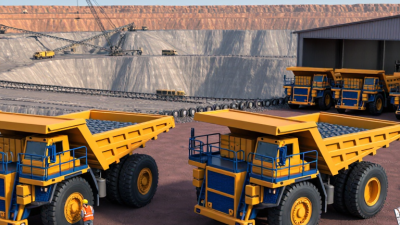
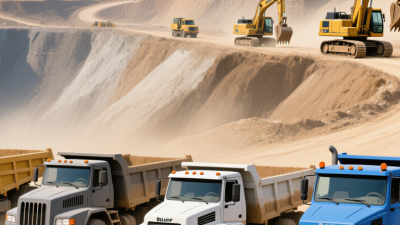
What Are the Top Electric Mining Trucks in China?
China’s mining sector is testing a practical question: can battery-powered haul trucks move heavy loads reliably across demanding sites? The answer depends on more than battery capacity. Payload, range, charging time, gradients, temperature, and service support all matter. A truck may look impressive in a brochure, then lose time waiting beside a charger. Details matter.
The International Energy Agency’s Global EV Outlook 2024 reports that electric truck sales worldwide rose by about 35% in 2023, reaching roughly 54,000 vehicles. China accounted for the largest share of this market. However, those figures cover electric trucks broadly, not mining trucks alone. They show momentum, not proof that every mine is ready to electrify. That distinction is important.
This guide compares leading Electric Mining Truck options available in China through practical criteria: rated payload, operating range, charging or battery-swapping arrangements, safety features, and documented field use. Manufacturer specifications provide a starting point; independent verification and mine-site operating records offer stronger evidence. We also consider whether local parts and technical support can keep a truck working through long shifts. No ranking is perfect. Public data can be uneven, and claimed performance may not match a steep, dusty haul road. Readers should treat the comparisons as a shortlist, then confirm figures directly with manufacturers and operators.
How Electric Mining Trucks Are Classified in China
What Are the Top Electric Mining Trucks in China?
How Electric Mining Trucks Are Classified in China
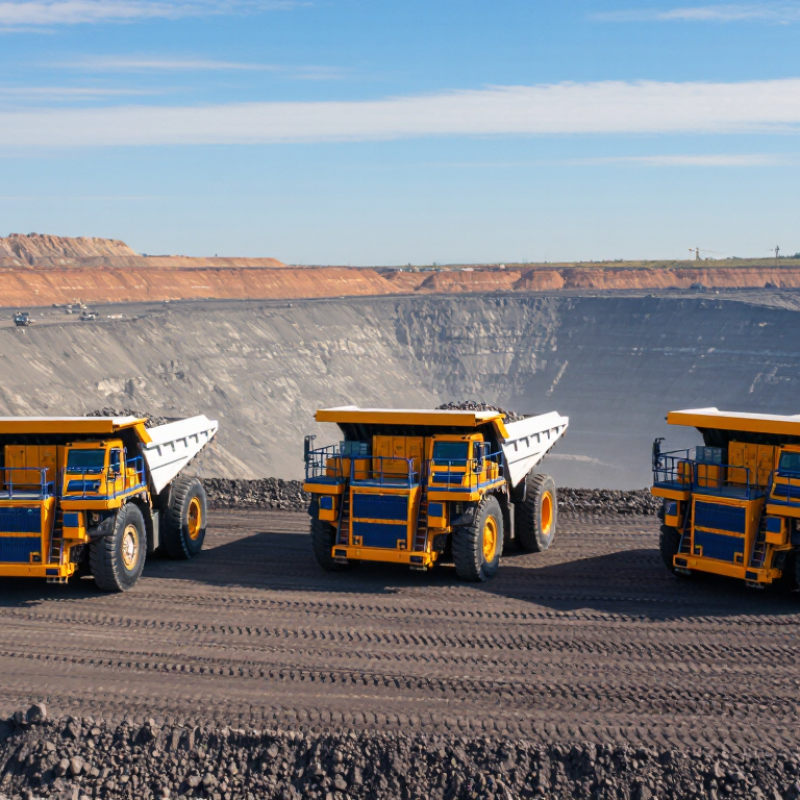
In China, electric mining trucks are commonly classified by vehicle structure, power system, payload, and working environment. Rigid-frame trucks suit large open-pit sites, where wide haul roads and heavy loads are common. Articulated models can handle tighter routes and uneven ground. These categories describe practical design differences, not a single universal ranking.
Power systems provide another useful distinction. Battery-electric trucks store energy in onboard battery packs and need a charging plan that fits shift patterns. Hybrid or range-extended designs combine electric drive with another energy source. Payload classes also matter, but weight bands can vary by manufacturer and project specification. Check the truck’s rated payload, gradeability, braking system, and expected duty cycle together. A high payload figure alone can mislead.
Tips: Match the classification to the mine, not just the brochure. Look at road slope, dust, temperature, charging access, and daily travel distance. Ask how performance was measured. The labels can feel untidy, and sometimes they are. A site trial may reveal limits that a specification sheet misses.
What Are the Top Electric Mining Trucks in China?
How Electric Mining Trucks Are Classified in China
Electric mining trucks are commonly grouped by rated payload capacity. The bars mark example payload points within broad capacity bands, not sales, market share, or a universal standard; classifications can vary by mine and operator.
Criteria for Ranking China’s Leading Electric Mining Trucks
Ranking China’s leading electric mining trucks requires more than comparing advertised payloads or battery sizes. A credible scorecard should weigh tonnes moved per energy unit, cycle time, gradeability, and availability across a full shift. Real operating data matters. Compare trucks on the same haul route, load, and ambient temperature whenever possible.
Battery performance should be assessed alongside charging time, thermal control, and energy use during loaded climbs. Also examine braking systems, visibility, cab comfort, and service access; these details affect safety and downtime.
In Chinese mining regions, site conditions vary sharply, so a model suited to a short, flat haul may not fit a steep or remote operation. Rankings can still be imperfect when test conditions differ. That limitation deserves attention.
Tips:
Ask for measured energy use per tonne, not just maximum range. Check whether charging equipment and maintenance support match the mine’s daily schedule. Keep records across seasons; one week of testing can mislead.
Leading Electric Mining Truck Models and Manufacturers in China
China’s electric mining truck market is not one-size-fits-all. Leading domestic manufacturers offer battery-electric rigid-frame haulers, conversion-based platforms, and trolley-assisted configurations for large open-pit operations. Compare models by payload, usable energy, charging strategy, and duty cycle—not headline range alone. A truck carrying more ore may still lose time if charging bays are poorly placed. Small details matter.
During a haul-road trial, record loaded and empty trips, ramp gradients, ambient temperature, and charging queues. Ask manufacturers for cycle data from comparable mines, plus details on battery thermal management and service response. Check how payload affects tire wear, braking, and energy use. The best model often fits the site’s daily rhythm, not the largest battery. A tidy brochure cannot show every rough edge. That is worth remembering.
Tips: Confirm connector standards, charging power, and spare-part availability before ordering. Pilot one truck on a representative route. Track energy use per tonne, downtime, and operator feedback. If results change between seasons, investigate why; mine conditions rarely stay consistent.
Top Electric Mining Truck Classes in China
Representative electric haul-truck categories available in the Chinese market. The payload figures below describe class ranges, not the certified specifications of a particular model.
| Truck Class |
Typical Payload Class |
Electric Configuration |
Common Application |
Key Selection Consideration |
| Battery-electric rigid mining truck |
Approximately 90–105 tonnes |
On-board rechargeable battery; charging or battery-swapping arrangements depend on the vehicle and site |
Open-pit mines with established charging or swap infrastructure |
Match battery capacity and charging time to haul distance, daily operating hours, and available site power |
| Battery-electric wide-body mining truck |
Commonly in the medium-to-heavy mining-truck segment; payload varies by configuration |
Battery-electric drive, with charging or swapping options depending on the design |
Mine and quarry haul roads where a wide-body truck layout suits the operating conditions |
Check rated payload, loaded-road gradients, tire specification, and road-width requirements for the exact configuration |
| High-payload battery-electric rigid truck |
Above the 100-tonne class; exact ratings are model-specific |
Large battery-electric platform; site charging strategy is central to deployment |
High-volume open-pit haulage on routes suited to the vehicle’s operating range |
Assess usable battery energy, cycle time, payload, and the number and location of charging points |
| Electric trolley-assist mining truck |
Typically a large rigid-truck platform; payload depends on the base vehicle |
Electric power supplied through overhead trolley lines on equipped road sections; vehicle configuration varies |
Mine routes with sustained uphill sections and infrastructure suitable for trolley lines |
Compare infrastructure cost and route coverage with expected energy savings and operating hours |
| Hybrid or range-extended mining truck |
Payload depends on the underlying truck model |
Combines electric traction with an additional onboard energy source; system design varies |
Sites where fully electric charging infrastructure or route coverage is not yet practical |
Confirm the actual energy sources, fuel use, emissions profile, and maintenance requirements |
How Top Models Compare in Capacity, Range, and Performance
China’s electric mining-truck market is expanding, but headline range alone does not identify the strongest hauler. The IEA’s Global EV Outlook 2024 names China as the world’s largest electric-truck market, providing useful context for its fast-growing mine fleet. Compare trucks by rated payload, usable battery capacity, and tonnes moved per shift. A high-payload model may reduce trips, yet steep ramps and heavy loads can drain its battery faster. Smaller units may suit short, repeated routes. Less impressive on paper, sometimes better underground or across a compact pit.
Range figures need careful reading. Ask whether they describe a loaded cycle, a flat test route, or ideal conditions. Actual performance shifts with gradient, temperature, road resistance, and charging access. Regenerative braking can recover energy on descents, though it cannot erase the cost of long climbs. ICMM’s 2021 report, Innovation for Cleaner, Safer Vehicles, discusses electrification’s potential to reduce diesel-related exposure in mining. That benefit depends on site design, not just the truck. I would treat any single range figure as a planning estimate, not a shift guarantee. Real route logs are more useful: record payload, elevation change, energy used, and charging time across several shifts.
Where Electric Mining Trucks Are Used and How They Are Charged
Electric mining trucks in China are best suited to open-pit mines with predictable haul routes and regular loading cycles. Large rigid-frame trucks can move ore or overburden between excavators, crushers, and dumping areas. Smaller electric vehicles may serve shorter routes or support work near processing sites. Their usefulness depends on more than payload: steep grades, dusty roads, and long shifts all affect energy use. A truck that performs well on a flat route may need more frequent charging on a demanding one.
Tips: Map routes and record energy use across full shifts. Include waiting time at loading points; it can change the charging plan.
Charging usually happens at a dedicated depot, during scheduled breaks, or near loading and unloading areas. High-power chargers can add energy during shift changes, while battery swapping may suit sites designed for compatible packs and rapid turnaround. Neither approach fits every mine. Operators should check grid capacity, charger access, and backup arrangements before selecting equipment. Dust, heat, and winter temperatures can also affect charging reliability. I would avoid assuming that the shortest charging stop is always the most efficient; queues and detours can erase the time saved.