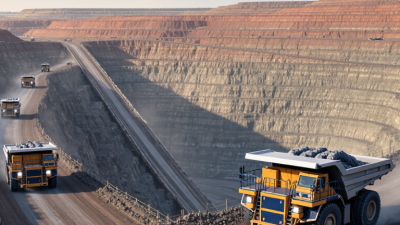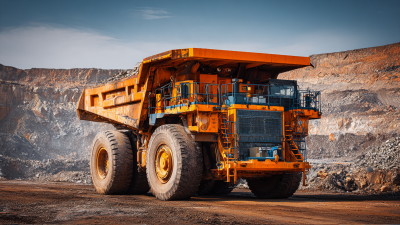
In 2026, the best Automated Mining Trucks will not be chosen by payload alone. A haul truck crossing a dusty pit must fit the mine’s road design, loading equipment, maintenance capacity, and communications network. It must also perform reliably through long shifts and changing weather. Small details matter: tire life, braking response, and how quickly a technician can diagnose a fault. No single model suits every site.
The scale is already significant. Komatsu has reported that its FrontRunner autonomous haulage system has moved more than 10 billion tonnes since entering commercial operation. Caterpillar has reported more than 6 billion tonnes hauled by its autonomous trucks. These are company-reported operating milestones, not independent comparisons of truck performance. Still, they show that autonomous hauling is established technology, not a distant promise. Caterpillar mining executive Denise Johnson has emphasized the need to pair productivity gains with safety; that remains a useful test for any 2026 shortlist. The numbers do not settle the choice.
This guide compares leading systems by payload, deployment maturity, safety features, operating flexibility, and support requirements. It draws on manufacturer disclosures and industry reporting, while treating marketing claims with care. Some site-level performance data remains private. That limits direct comparisons—and deserves scrutiny. The strongest choice may be the truck that fits a mine’s actual constraints, not the one with the most impressive headline statistic.
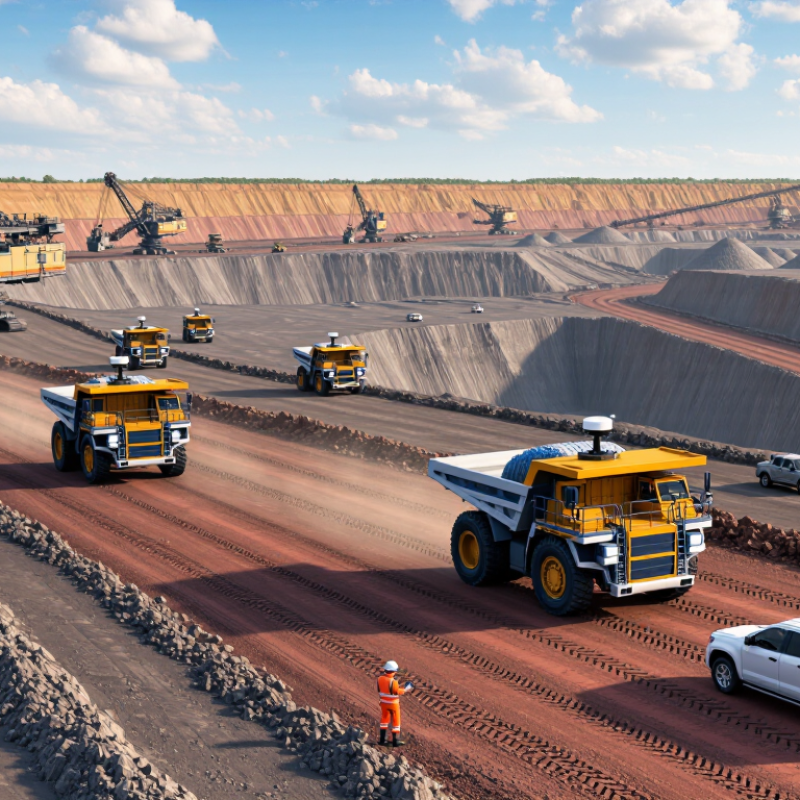
Automated mining trucks combine cameras, radar, positioning systems, and onboard computers to move ore along mapped haul roads. Sensors scan the truck’s surroundings, detecting berms, equipment, and unexpected obstacles. The computer compares this information with a planned route and adjusts steering, speed, and braking. Large wheels roll slowly, but each movement is monitored.
A central dispatch system assigns trips between loading areas and crushers. When a shovel fills the truck, the truck can travel to a designated dump point and return for another load. Route data and vehicle status appear on screens in a control room, where trained staff can monitor traffic and respond to alerts. That matters. A blocked road or a delayed vehicle can affect the whole cycle.
Automated operation still depends on careful setup. Road maps must be accurate, sensors need maintenance, and dusty conditions can make detection harder. Operators may need to slow or stop a truck when the site changes unexpectedly. The process is efficient, but not magic. Even a well-designed system can misread a situation, so human oversight remains part of the work.
What Are the Best Automated Mining Trucks in 2026?
Key Technologies Behind Autonomous Haulage
Autonomous haulage depends on several systems working together, not one clever sensor. LiDAR and radar map haul roads, while cameras help identify people, berms, and obstacles. Satellite positioning, inertial sensors, and onboard maps estimate each truck’s location. Fleet software then assigns routes and adjusts dispatch as loading areas change. In dusty conditions, though, visibility and sensor performance can degrade. That remains a practical weakness.
Reliable communication links trucks to dispatch and nearby equipment. Onboard computers must also make safe decisions when connectivity drops. The International Labour Organization has reported that mining employs about 1% of the global workforce but accounts for roughly 8% of fatal occupational accidents. This figure underscores why autonomous systems need layered safeguards, including geofenced work zones, redundant braking, and clear procedures for people working near machines. ISO 17757 sets safety requirements for autonomous and semi-autonomous earth-moving machinery.
Tips: Check real-site performance, not just demonstrations. Ask how the system handles wet roads, radio dead zones, and mixed traffic. Small delays add up over a long shift. Also track payload accuracy and unplanned stops; a truck can drive smoothly and still disrupt production.
Key technologies behind autonomous haulage and typical payload bands by truck class
Payload bands are indicative; actual ratings vary by truck configuration and operating conditions. Autonomous haulage combines GNSS/INS positioning, radar and camera-based perception, onboard planning, fleet dispatch, and safety systems. The right truck depends on payload needs, route conditions, and how well these technologies integrate with site operations.
Automated mining truck systems in 2026 are best assessed as coordinated operations, not trucks alone. A typical system combines onboard perception, route planning, fleet dispatch, and site-level traffic control. Cameras, radar, and lidar help detect haul-road edges, nearby vehicles, and workers. Dust changes everything. Sensor performance should be checked in the actual light, weather, and road conditions of the mine.
Leading systems connect truck movements with loading points, dump areas, maintenance schedules, and human-operated equipment. Dispatch software can reduce queues by adjusting routes and assigning trucks as conditions change. Yet clean dashboards do not guarantee smooth operations. A blocked road or delayed shovel can disrupt a carefully planned cycle. Operators need clear alerts and practical ways to pause or redirect vehicles.
When comparing systems, examine how they handle lost communications, unexpected obstacles, and mixed traffic. Ask for evidence from comparable sites, including uptime, intervention frequency, and maintenance demands. These measures reveal more than advertised capacity. Integration also matters: existing fleet tools, site maps, and operating procedures may need changes. That takes time, and early results can be uneven. A useful assessment includes training needs and the effort required to keep maps and safety zones current.
The best choice depends on the mine, not a headline payload figure. Compare trucks against the same route, shift length, gradient, road condition, and loading pattern. Then check payload, cycle time, availability, fuel or energy use, and performance in dust, rain, and low visibility. Ask for site-trial data, not just simulated results. Small delays at loading points can erase gains on paper.
Look beyond the truck. Compare fleet-control software, communications coverage, maintenance skills, and how safely people and conventional equipment can share the operating area. The Global Mining Guidelines Group’s guidance on autonomous mining stresses planning across technology, operations, and safety. The World Economic Forum’s 2017 mining and metals report estimated digital transformation could create $425 billion in value across the industry by 2025; that is a broad sector estimate, not a promise for any truck fleet. I’d treat it as context, then demand verified site figures.
Tips: Measure it. Track loaded and empty cycle times, queueing, unplanned stops, and energy per tonne over several weeks. Compare like with like. Include training, infrastructure, support, and downtime in total cost of ownership. One weak spot in many comparisons is assuming ideal connectivity; real haul roads are less tidy.
Automated mining trucks deliver the greatest value on long, repetitive haul routes, where steady cycles matter more than flexible driving. Large open-pit mines are strong candidates: trucks can follow planned routes through dust, darkness, and changing shifts. The benefit is practical. Fewer stops and more consistent loading can improve fleet use, while remote supervision can keep workers away from busy haul roads. Small details count, too: a well-marked loading zone and reliable communications can prevent costly delays.
The case grows stronger when mines must move more material with limited equipment and labor. The International Energy Agency’s Global Critical Minerals Outlook 2024 projects that announced copper mine projects could leave supply about 30% below demand in 2035. That is not a truck-performance forecast, but it signals pressure to make existing operations more productive. Still, autonomy is not magic. Poor road surfaces, weather, and bottlenecks at shovels can erase expected gains. A site assessment should compare actual cycle times, downtime, maintenance needs, and safety exposure before automation begins. Start with one route. Measure the result. Be ready to revise the plan.
| Truck category | Typical payload class | Where it delivers the greatest value | Automation fit | Key operational advantages | Main constraints |
|---|---|---|---|---|---|
| Ultra-class rigid-frame haul truck | Approximately 220–360 metric tonnes; exact payload depends on model and mine specification. | Large, long-life open-pit mines with high, repeatable material movement and well-defined haul roads. | Strong candidate for established autonomous haulage routes where traffic, loading points, and dumping areas can be managed. | High tonnes per trip; fewer truck movements may be needed for a given production target; consistent operation can support predictable dispatch and haul cycles. | High purchase and infrastructure requirements; steep grades, changing road conditions, mixed traffic, and complex loading areas require careful planning. |
| Large rigid-frame haul truck | Approximately 100–220 metric tonnes; payload varies by configuration. | Medium-to-large open pits, phased mine expansions, or operations where ultra-class trucks are not the best fit for road, shovel, or fleet capacity. | Good fit when a mine can standardize routes and coordinate autonomous and human-operated equipment. | A flexible payload class for balancing truck capacity with loading equipment and road design; can support gradual automation deployment. | Benefits depend on fleet scale, route repeatability, and effective integration with dispatch, loading, and safety systems. |
| Medium rigid-frame haul truck | Approximately 40–100 metric tonnes; payload varies by model and application. | Smaller pits, shorter hauls, constrained roads, and operations that need more flexibility in fleet sizing. | Potentially suitable for automated or remotely supervised work in controlled areas; site-specific deployment feasibility is essential. | Smaller vehicle footprint can suit tighter layouts and lower-volume routes; fleet capacity can be scaled in smaller increments. | Lower payload per trip means more trips for the same material volume; automation economics may be less favorable without sufficient operating hours or route repetition. |
| Autonomous-ready truck and site system | Uses the payload class of the selected truck; autonomy does not itself determine payload capacity. | Sites seeking to reduce personnel exposure in active haul areas and improve consistency on repetitive haul cycles. | Requires a complete site solution, including vehicle control, positioning, communications, traffic management, obstacle detection, and operating procedures. | Can remove drivers from designated operating zones and enable centrally coordinated truck movements under suitable conditions. | Performance depends on site design, communications coverage, maintenance, weather, change management, and safe interaction with people and other equipment. |
Payload ranges are indicative industry classes, not specifications for a particular truck. “Best” depends on mine layout, haul distance, road conditions, loading equipment, production plan, and the maturity of the site’s automation infrastructure. Automation can improve consistency and reduce personnel exposure in designated areas, but results are site-specific and should not be treated as guaranteed productivity or cost savings.