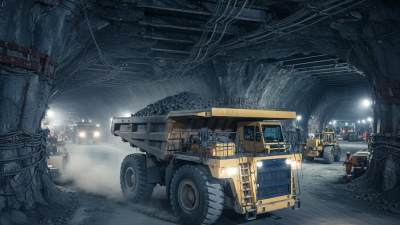
Top Autonomous Mining Trucks for Global Buyers
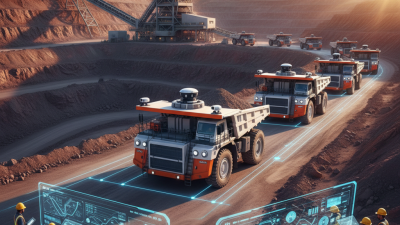
Global buyers are examining Autonomous Mining Trucks as practical tools for safer, more consistent haulage. These vehicles can follow programmed routes, maintain controlled spacing, and operate through dusty open-pit environments. Their value becomes clearer beside a 240-ton payload, steep ramp, and twelve-hour shift.
Mark Cutifani, former chief executive of Anglo American, expressed the safety objective clearly: “We are not trying to remove people from the business; we are trying to remove people from harm’s way.” That principle remains important when comparing autonomous platforms, remote-control systems, sensors, and fleet-management software. Technology should protect workers, not merely increase production figures.
Real mine conditions are less predictable than product brochures suggest. Rain can reduce visibility. Loose material can alter stopping distances. A reliable truck must communicate with dispatch systems, detect obstacles, and respond safely when connectivity weakens. Buyers should examine payload consistency, battery or fuel performance, service support, operator training, cybersecurity, and integration with existing equipment.
No ranking fits every mine.
This guide compares leading models for global buyers, while recognizing regional infrastructure and operating cultures. A truck that performs well in Western Australia may need different calibration in Chile, Indonesia, or South Africa. That limitation deserves attention. Autonomous mining is powerful, but it is not effortless. Successful deployment depends on disciplined planning, skilled supervision, transparent performance data, and a willingness to review early assumptions. The strongest purchasing decision may not be the most advanced one. It may be the truck that works reliably every shift.
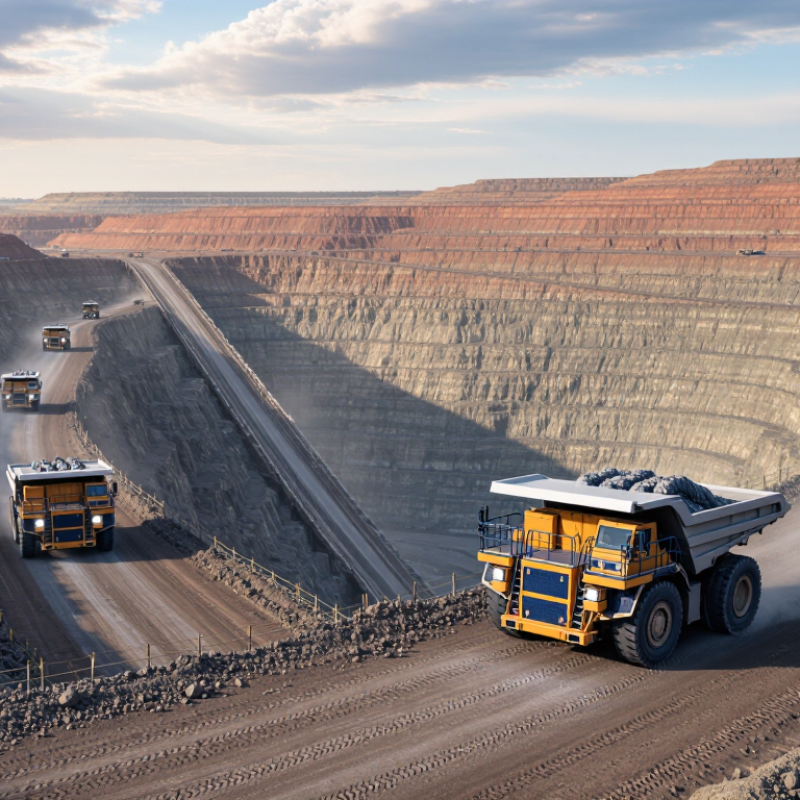
Autonomous Mining Trucks: Definition, Systems, and Operating Principles
Top Autonomous Mining Trucks for Global Buyers
Autonomous mining trucks are heavy haul vehicles that navigate, load, and dump with limited direct control. Their operating principle combines perception, positioning, planning, and vehicle control. These functions must work together continuously.
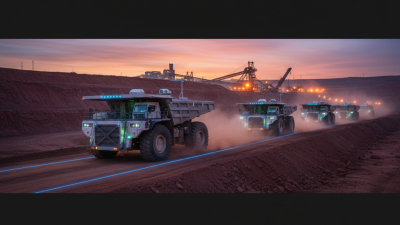
Cameras, lidar, radar, and ultrasonic sensors scan haul roads, berms, workers, and nearby equipment. Satellite positioning supports route accuracy, while inertial sensors maintain movement data during signal interruptions.
An onboard computer compares sensor inputs with digital maps and approved operating zones. It then selects speed, steering, braking, and stopping actions. The truck’s drive-by-wire system executes these commands through electronic controls. It must also detect obstacles and enter a controlled stop when conditions become uncertain.
Reliable operation depends on more than sophisticated hardware. Fleet software assigns routes, monitors payloads, records events, and coordinates traffic at intersections.
Geofencing can restrict movement near unstable ground or maintenance areas. Remote operators remain important for unusual conditions and recovery tasks.
That distinction matters.
Dust is difficult. Rain can distort visibility. Poor road grading may also confuse planning systems.
In practice, sensor cleaning, tire checks, map updates, and disciplined road maintenance strongly affect performance. A deployment can appear impressive during a trial yet struggle across changing seasons.
This is where buyers need measured testing, transparent incident records, and trained site technicians.
No system is perfect. Careful human review still improves autonomous hauling.
Leading Autonomous Mining Truck Models for Global Buyers
Top Autonomous Mining Trucks for Global Buyers
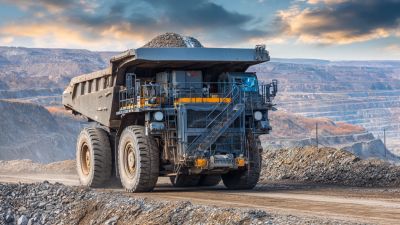
Leading autonomous mining truck models for global buyers differ by payload, terrain, and site maturity. A 100-ton rigid truck may suit narrow haul roads and moderate production targets. Larger 220-ton models can move more material per cycle, but they demand stronger roads, wider turning areas, and careful loading coordination. Electric-drive systems often improve control on steep gradients. However, fuel savings depend on route design, battery support, and local power reliability.
Reliable selection starts with field evidence. Review autonomous navigation accuracy, obstacle detection, braking performance, and fleet-control compatibility. Ask for test results from dusty, wet, and low-visibility conditions. A truck that performs well on a demonstration route may struggle beside a changing pit wall. Maintenance access also matters. Technicians need clear sensor panels, common replacement parts, and practical diagnostic tools. No model is perfect. Buyers should compare downtime records, not only advertised capacity.
Tips: Match payload with your actual road conditions, not future hopes. Check operator training, wireless coverage, emergency procedures, and service response times. Request a pilot period with measurable targets, including cycle time, fuel use, near-miss alerts, and availability. Leave room for human review. Autonomous control reduces routine exposure, but poor planning can still create expensive delays. Forecasts can be wrong. Track real results after deployment.
Top Autonomous Mining Trucks for Global Buyers - Leading Autonomous Mining Truck Models for Global Buyers
A specification-focused comparison of large haul trucks equipped for autonomous or highly automated open-pit mining operations.
| Anonymous Model |
Nominal Payload |
Engine Output |
Approx. Gross Vehicle Weight |
Typical Body Capacity |
Drive System |
Autonomous Operating Capability |
Best-Fit Mining Application |
Market Status |
| Model A — 72 t Class |
72 metric tonnes |
Approx. 750 kW |
Approx. 130 tonnes |
Approx. 40–45 m³ |
Diesel-electric, 4 × 2 haul-truck configuration |
Autonomous haulage with route management, obstacle detection, fleet dispatch, and remote supervision |
Medium-scale open-pit mines, short-to-medium haul routes, and phased automation projects |
Commercially deployed |
| Model B — 100 t Class |
100 metric tonnes |
Approx. 780 kW |
Approx. 180 tonnes |
Approx. 55–60 m³ |
Diesel-electric |
Autonomous driving, automatic loading and dumping coordination, geofenced operation, and central fleet control |
Hard-rock mines requiring a balance between operating flexibility and haulage productivity |
Commercially deployed |
| Model C — 150 t Class |
150 metric tonnes |
Approx. 1,200 kW |
Approx. 255 tonnes |
Approx. 85–95 m³ |
Diesel-electric with traction-control system |
Autonomous navigation, collision avoidance, high-precision positioning, and remote intervention |
Large open-pit copper, iron-ore, coal, and overburden operations |
Commercially deployed |
| Model D — 220 t Class |
220 metric tonnes |
Approx. 1,940 kW |
Approx. 385 tonnes |
Approx. 125–135 m³ |
Diesel-electric |
Autonomous fleet operation with high-precision positioning, dynamic obstacle handling, and traffic-control integration |
High-volume mines with long production cycles and established haul-road infrastructure |
Commercially deployed |
| Model E — 240 t Class |
240 metric tonnes |
Approx. 1,940 kW |
Approx. 390 tonnes |
Approx. 145–175 m³ |
Diesel-electric with regenerative retarding system |
Autonomous haulage, automatic speed control, loading-zone alignment, dump-point control, and remote monitoring |
Large-scale bulk-material mines where payload consistency and high availability are priorities |
Commercially deployed |
| Model F — 290 t Class |
290 metric tonnes |
Approx. 2,100 kW |
Approx. 500 tonnes |
Approx. 195–220 m³ |
Diesel-electric |
Autonomous production hauling with fleet optimization, route-based dispatching, machine health monitoring, and remote control fallback |
Very large open-pit mines with high annual material movement and dedicated haul roads |
Commercially deployed |
| Model G — 360 t Class |
360 metric tonnes |
Approx. 2,650 kW |
Approx. 610 tonnes |
Approx. 240–270 m³ |
Diesel-electric with advanced traction management |
Autonomous haulage supported by site-wide fleet management, precision positioning, and controlled loading and dumping zones |
Ultra-large iron-ore and other bulk-mineral operations with high-capacity loading equipment |
Commercially deployed |
Note: Specifications are representative published figures for autonomous-capable haul-truck classes and may vary by body configuration, engine setting, altitude, payload policy, tire selection, and mine-site operating conditions. Autonomous functions generally require site-specific infrastructure, digital communications, high-precision positioning, safety controls, and integration with loading and fleet-management systems.
Payload, Range, Safety, and Automation Features Compared
Top Autonomous Mining Trucks for Global Buyers
Payload, Range, Safety, and Automation Features Compared
Autonomous mining trucks must match the site, not just the brochure. Payload is the first practical measure. A 220-ton truck may reduce haul cycles, but overloaded beds increase tire wear and braking distance. Smaller units can perform better on narrow benches or steep ramps. Real production depends on road quality, loading efficiency, and queue time.
Range needs careful interpretation. Battery-electric models may offer quiet operation and lower local emissions, while diesel-electric systems can support longer shifts. However, charging time, temperature, gradients, and payload sharply affect usable range. A truck that completes ten cycles in mild weather may perform differently in dust or freezing conditions. Test data from the actual mine matters more than laboratory figures.
Safety automation usually combines lidar, radar, cameras, high-precision positioning, and obstacle detection. Geofenced routes help control access near crushers, shovels, and maintenance zones. Remote operators can intervene when visibility drops or a human worker enters the route. Strong systems also record events, monitor fatigue risks, and manage controlled stops. Automation reduces routine exposure, but it does not remove operational responsibility. Sensor cleaning remains essential. Software can fail. A practical purchase review should examine recovery procedures, communication coverage, training, and service support before comparing headline payload numbers.
Site Compatibility, Infrastructure, and Fleet Integration Requirements
Top Autonomous Mining Trucks for Global Buyers
Site compatibility matters more than advertised payload. A truck must match haul-road width, gradients, turning radii, and ground conditions. During site assessments, engineers should measure road crowns, drainage points, berm heights, and loading-zone visibility. Small errors can cause large operating delays.
Infrastructure is equally important. Autonomous trucks need reliable positioning, communications coverage, dispatch software, and protected control areas. Wireless signals may weaken near rock faces, crushers, or deep pits. Backup links and local monitoring stations reduce disruption during network faults. Charging or fueling layouts must also support traffic flow without creating queues. Dust, rain, vibration, and temperature changes require equipment rated for the actual environment, not an average climate.
Fleet integration often exposes hidden weaknesses. Existing trucks, loaders, graders, and maintenance systems must exchange useful data. Standard interfaces help, but compatibility is not automatic. A mixed fleet may need new traffic rules, operator training, and phased commissioning. No site is perfectly ready. That is normal. However, rushing deployment can create unsafe habits and unreliable production data. Buyers should request simulation results, maintenance records, cybersecurity controls, and clearly defined human intervention procedures. A pilot on one haul circuit can reveal more than a polished demonstration. Teams should document every exception, including manual overrides and unexpected stopping zones. Those details often determine whether expansion is practical.
Ownership Costs, Regulations, and Selection Criteria by Region
Buying autonomous mining trucks requires more than comparing payload and sensor range. Ownership cost includes purchase price, site mapping, communications infrastructure, operator training, and spare components. A remote pit may need private wireless coverage, edge computers, and sheltered charging bays. These expenses often exceed early estimates. They often do.
Fuel or electricity use, tire wear, planned maintenance, and software support should be modeled per operating hour. Include downtime caused by blasting, heavy rain, extreme heat, and shift changes. A spreadsheet based only on advertised productivity is unreliable. Experienced mine managers should request site-specific trials and verify maintenance records before signing long contracts.
Regulations vary by region and mine type. Buyers should confirm requirements for autonomous vehicle testing, worker separation, radio spectrum, cybersecurity, and data storage. Some jurisdictions require trained remote supervisors, documented risk assessments, or local certification. Cross-border projects may also face different import duties, emissions rules, and operator obligations. Local legal counsel and safety engineers should review the actual site, not a sales brochure.
Selection criteria must reflect regional conditions. Cold northern mines need battery and hydraulic systems tested below freezing. High-altitude sites require careful power and braking assessments. Arid operations demand strong dust protection and dependable water management. Australia, South America, and Africa may differ sharply in road design, connectivity, labor rules, and technical support. I would not approve a large fleet without a measured pilot. Pilot results can still disappoint, but they expose weak assumptions before those assumptions become expensive.