What Are the Top Underground Mining Trucks?
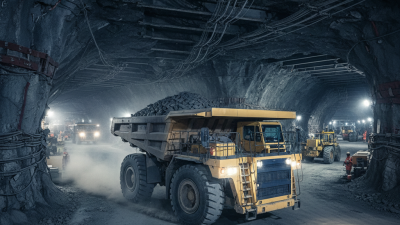
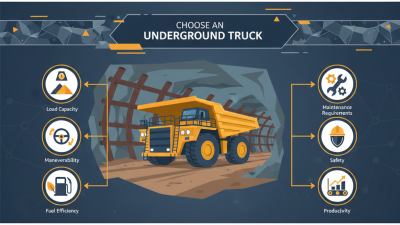
Choosing the top underground mining trucks is not a simple horsepower contest. An Underground Mining Truck must match the mine’s tunnel width, haul distance, ramp grade, and loading system. Experienced operators examine payload, turning radius, ground clearance, braking performance, and driveline response. The details matter.
This guide compares truck designs through practical operating conditions, not brochure claims alone. Diesel, battery-electric, and trolley-assisted models each present different strengths. A diesel truck may offer flexible refueling, while a battery-electric truck can reduce underground exhaust and heat. However, charging time, battery weight, ventilation planning, and service support deserve careful review. Conditions change.
Reliable selection also depends on productivity beyond the rated payload. A larger body can move more material, yet it may struggle in narrow headings or sharp bends. Smaller trucks often maneuver better, but repeated trips can reduce hourly output. That trade-off is easy to overlook. No ranking is perfect.
The following discussion considers recognized manufacturers, published specifications, operator feedback, maintenance access, and total operating demands. It also asks practical questions: Can technicians reach critical components safely? Does the braking system suit steep declines? Can the truck maintain performance during long shifts? These questions reflect real mine planning more closely than a single specification. Readers should verify current data with manufacturers and site engineers, because configurations vary by region, orebody, and mine layout. Even strong assumptions need testing. A truck that performs well in one operation may become inefficient elsewhere.
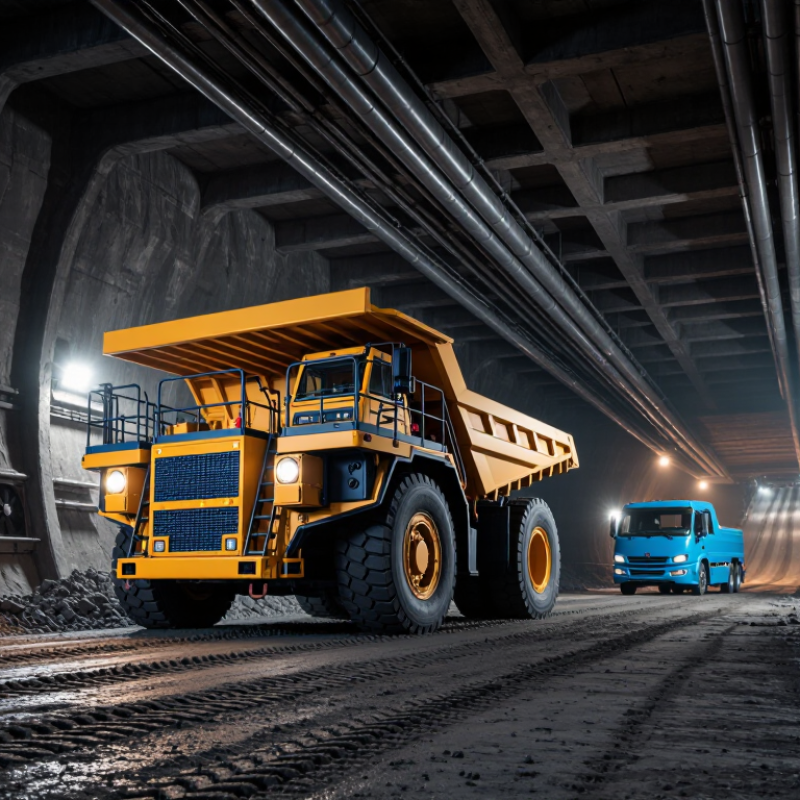
How Underground Truck Performance Is Measured: 30–65 t Payload Classes
What Are the Top Underground Mining Trucks?
Underground truck performance begins with payload, but capacity alone is misleading. Trucks in the 30–65 t class are usually compared through tonnes per operating hour, cycle time, availability, and cost per tonne. A 60 t truck completing three loaded cycles per hour can theoretically move 180 t hourly. Delays reduce that figure quickly.
Cycle time includes loading, haulage, dumping, reversing, and queuing. Grade changes everything. A 12% ramp may reduce speed, increase engine load, and raise brake temperatures. Operators should record payload with onboard scales, then verify readings against dispatch data. The Global Mining Guidelines Group recommends consistent equipment data collection for mobile fleet decisions. ISO 19296:2018 also emphasizes braking, visibility, and control risks for mining machines.
Top performance needs more than speed. Mechanical availability above 85% can look impressive, yet low utilization may hide poor scheduling. MSHA recorded 38 mining fatalities in the United States during 2023, reinforcing the need to measure safety exposure alongside production. Its worktime statistics support rate-based comparisons, not simple incident totals. Fuel use, tire wear, maintenance hours, and operator comfort should enter the same evaluation.
The weak point is imperfect data.
Payload sensors drift. Road conditions change. A short test may flatter any truck. I would compare at least several weeks of shift records, including wet headings, traffic delays, and unexpected stops. The best 30–65 t truck is the one that sustains useful tonnes safely, not merely the one with the largest rated payload.
Top Underground Mining Trucks: Performance Across 30–65 t Payload Classes
Underground truck performance is commonly assessed by payload capacity and loaded tramming speed. The benchmark values below represent realistic operating ranges for articulated underground haul trucks; actual results vary with gradient, road condition, ventilation, operator practice, and payload policy.
Higher payload classes increase haulage capacity, while loaded speed generally decreases as vehicle mass and operating constraints rise. Payload and cycle time should therefore be evaluated together when estimating tonnes per hour.
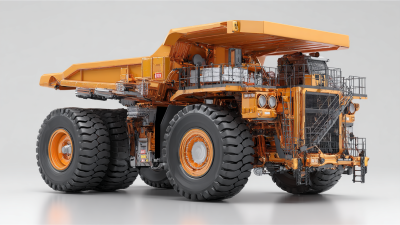
Sandvik TH663i: A 63-t Truck for High-Capacity Underground Hauling
A 63-ton underground haul truck is built for demanding production cycles. Its large payload can reduce the number of trips between the loading point and underground crusher. That matters when haul roads are long, steep, or congested. However, capacity alone does not define the best truck. Road width, turning areas, ventilation, and loading equipment must match the vehicle.
In daily operation, an articulated frame helps the truck negotiate tight underground corners. Strong traction supports movement across uneven floors and wet sections. Reliable braking is equally important on declines. From a maintenance perspective, easy access to service points can shorten inspection time. Operators also need clear visibility, practical controls, and a comfortable cabin. Small design details affect fatigue after several hours. A 63-ton rating is impressive, but it may be excessive for narrow headings or weak road surfaces. That trade-off deserves honest review.
Tips: Measure the complete haul route before selecting this class of truck. Check ramp gradients, turning radii, bay dimensions, and ventilation capacity. Match the bucket size to the payload, or loading time may erase the truck’s productivity advantage. Keep tires, brakes, and steering systems under strict inspection. Record cycle times in real conditions, not only during ideal tests. Production targets can look excellent on paper and still disappoint underground.
Epiroc MT65: A 65-t Truck Designed for Large-Scale Operations
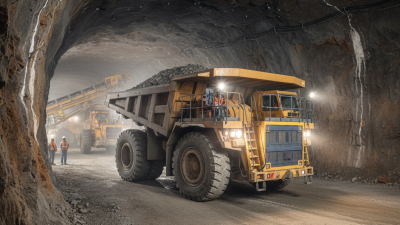
In large underground mines, haulage capacity can decide whether a production shift flows or stalls. A 65-ton underground truck is built for demanding, high-volume routes. Its size suits deep operations with wide headings and established loading points. The machine carries heavy loads through confined spaces without using surface-scale dimensions. That balance matters. Too small, and crews make more trips.
Operators assess payload stability, turning clearance, braking response, and service access. A practical 65-ton design should keep the load low and controlled on uneven ramps. Articulated steering can help the truck follow bends around pillars and crosscuts. Strong retarding performance is equally important during long descents. In daily use, visibility, cab comfort, and clear controls affect fatigue more than brochures suggest. Maintenance teams also need reachable filters, inspection points, and diagnostic information. Small delays multiply underground.
The truck fits large-scale operations best when tunnel dimensions, ventilation, and fleet scheduling support it. A larger payload does not automatically improve output. Congestion, slow loading, or weak road surfaces can erase the advantage. Fuel use and tire wear also deserve measurement across real duty cycles, not ideal tests. I would review the first months of operation carefully. Early data may reveal unexpected bottlenecks. That is where the design either proves practical or needs adjustment.
How Safety, Ventilation, Uptime, and Cost per Ton Rank the Top Trucks
The top underground mining trucks are not judged by payload alone. Safety, ventilation, uptime, and cost per ton reveal their real value. In confined headings, strong visibility, responsive braking, and stable handling reduce operator risk. Cameras, proximity alerts, and well-placed access steps also matter during wet, uneven shifts.
Ventilation can change the ranking quickly. Diesel trucks may deliver high power, but they increase heat and exhaust loads underground. Electric or low-emission alternatives can reduce airflow demands, especially on long ramps. However, charging access, battery heat, and shift length require careful planning. A truck that stops before the haul cycle ends is not efficient.
Uptime depends on more than engine strength. Easy filter access, protected hoses, and simple diagnostic systems can shorten repairs at the face. Maintenance records should track delays, tire damage, payload variation, and idle time. Cost per ton must include energy, labor, ventilation, tires, planned maintenance, and lost production. That calculation often challenges early assumptions. A cheaper purchase price may hide expensive downtime. A larger truck may lower trips but increase road wear and congestion. The best choice depends on the mine’s ramp grades, turning radii, rock conditions, and service support. Real operators should test these figures across several months, not one impressive shift.
What Are the Top Underground Mining Trucks? - How Safety, Ventilation, Uptime, and Cost per Ton Rank the Top Trucks
Representative comparison of underground haul-truck configurations using common hard-rock mining operating benchmarks.
How to read the comparison: Rankings combine safety controls, ventilation burden, expected availability and indicative haul cost rather than payload alone.
Ventilation: Airflow figures are planning-level ranges. Actual requirements must follow local regulations, engine certification, diesel particulate controls, mine depth, heat load and simultaneous equipment operation.
Availability: Mechanical availability represents a typical planning range after scheduled maintenance; it is not the same as utilization or production availability.
Cost per tonne: Indicative underground haulage ranges in U.S. dollars per tonne, assuming competent operators, normal road conditions, a balanced loading fleet and medium haul distances. Capital, financing, development and major infrastructure costs are excluded.