Top 5 Autonomous Haulage Solutions for Efficient Mining?
The mining industry faces constant pressures for efficiency and safety. Autonomous Haulage has emerged as a game-changer in this realm. These intelligent systems minimize human involvement, leading to cost savings and reduced risks. Mining companies now look to technology for solutions.
Many operators explore innovative solutions tailored for their specific needs. Each Autonomous Haulage system carries unique features, designed to enhance productivity. They promise reduced operational costs and fewer accidents. However, the implementation of these systems often reveals challenges that require attention.
Understanding the strengths and weaknesses of each solution is crucial. Companies must weigh the benefits against potential drawbacks. With the right insights, they can harness the power of Autonomous Haulage effectively. This balance can lead to a more efficient mining operation while navigating industry complexities.
Overview of Autonomous Haulage Solutions in Mining
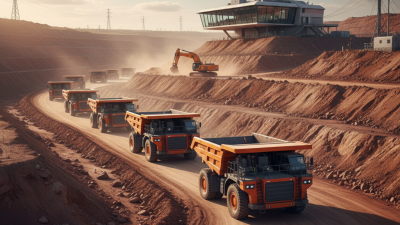
Autonomous haulage solutions are transforming the mining industry. They optimize operations and enhance efficiency. A study by the International Council on Mining and Metals highlighted that automation can reduce costs by up to 30%. This substantial reduction stems from fewer accidents and lower labor costs.
These solutions utilize advanced technology, such as GPS and sensors. They allow for real-time monitoring of vehicles, increasing safety and operational efficiency. For instance, autonomous trucks can work 24/7, increasing productivity. However, integrating these systems comes with challenges, like maintaining data security. As reported, about 75% of mining companies struggle with cybersecurity threats in this context.
While the benefits are clear, the transition to full automation is not without its pitfalls. Workforce displacement is a significant concern. Many skilled workers may face job loss, leading to community upheaval. A balance must be struck between embracing innovation and protecting livelihoods. Therefore, mining companies need to invest in reskilling their workforce. This approach not only supports the community but also ensures a smooth transition to more efficient mining practices.
Key Benefits of Implementing Autonomous Haulage Systems
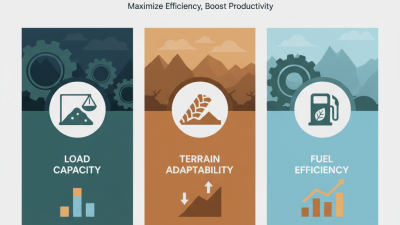
Autonomous haulage systems (AHS) can revolutionize efficiency in mining operations. When implemented, these systems improve productivity significantly. They reduce the need for manual labor in hazardous environments. With AHS, trucks operate independently, navigating complex terrains. This leads to more consistent material transportation. Consequently, mines can achieve higher output levels.
Moreover, implementing autonomous haulage enhances safety on site. Human errors largely contribute to accidents. AHS minimizes these risks by operating vehicles without human intervention. This creates a safer working environment for all employees. However, transitioning to AHS is not without its challenges. It requires significant investment in technology and training. Mines must adapt to new processes and systems.
Data shows that mines using AHS report improved operational efficiency. Yet, some companies struggle with full implementation. They may face issues with system integration or workforce resistance. Continuous evaluation and adjustment are essential for success. A clear strategy can help address these hurdles and maximize the benefits of AHS.
Top Technologies Driving Autonomous Haulage Solutions
Autonomous haulage solutions are revolutionizing mining operations. These technologies enhance operational efficiency while reducing risks. Key advancements include GPS, LiDAR, and advanced AI algorithms. These systems ensure precise navigation and real-time decision-making. Enhanced sensors detect obstacles, enabling safer transportation of materials.
Tips: Regularly update your technology. Software and system improvements can make a significant difference. Investing in training for operators enhances the benefits of these solutions.
Data analytics plays a crucial role. It optimizes routes and improves overall fleet management. Analyzing performance metrics helps identify areas for improvement. However, relying solely on technology can be risky. Human oversight is essential to catch potential errors.
Tips: Emphasize collaboration between operators and automated systems. It fosters a more effective work environment. Frequent assessments of your system’s performance can yield valuable insights, shaping future improvements. Remember, even advanced technologies need careful monitoring and evaluation.
Top 5 Autonomous Haulage Solutions for Efficient Mining
| Solution |
Key Features |
Efficiency Gain (%) |
Safety Improvement (%) |
Implementation Cost (Million $) |
| Solution A |
Advanced AI Navigation, Real-time Data Analysis |
20 |
30 |
3.5 |
| Solution B |
Integration with IoT, Predictive Maintenance |
25 |
35 |
4.0 |
| Solution C |
Drone Surveillance, Automated Scheduling |
30 |
40 |
4.5 |
| Solution D |
Remote Operation Centers, Fleet Optimization |
22 |
28 |
3.8 |
| Solution E |
High Precision GNSS, Advanced Collision Avoidance |
28 |
50 |
5.0 |
Comparative Analysis of Leading Autonomous Haulage Providers
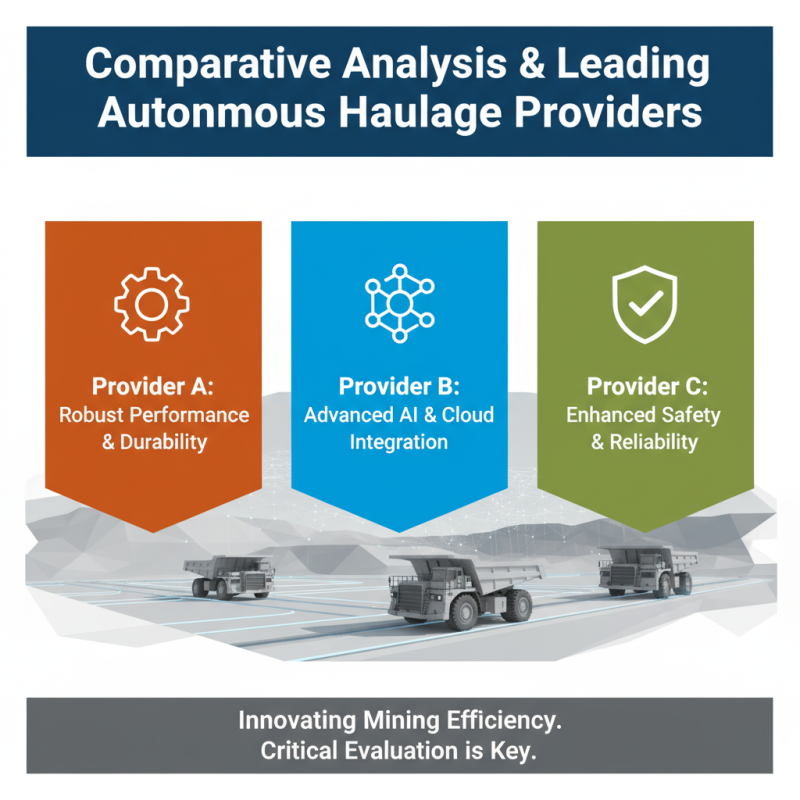
In the realm of autonomous haulage solutions, a few key players stand out. These companies are redefining mining efficiency with innovative technologies. Each provider brings unique strengths that contribute to performance and safety on-site. Their solutions are backed by years of research and industry experience. However, it is crucial to evaluate their offerings critically.
One major provider focuses on advanced sensor technology. This enhances obstacle detection and navigation, aiming to reduce accidents. Another competitor prioritizes software integration. Its systems allow real-time data tracking, offering insights into fleet performance. Yet, both could improve user interfaces. A more intuitive design could streamline operations further.
Meanwhile, a third contender emphasizes energy efficiency. This approach not only reduces costs but also minimizes environmental impact. However, a challenge arises in standardizing operations across various mine sites. Inconsistent implementation may lead to operational inefficiencies. Companies must remain adaptable to overcome these hurdles. The future of autonomous haulage is promising, but continuous improvement is essential in this evolving landscape.
Future Trends in Autonomous Haulage for Efficient Mining Operations
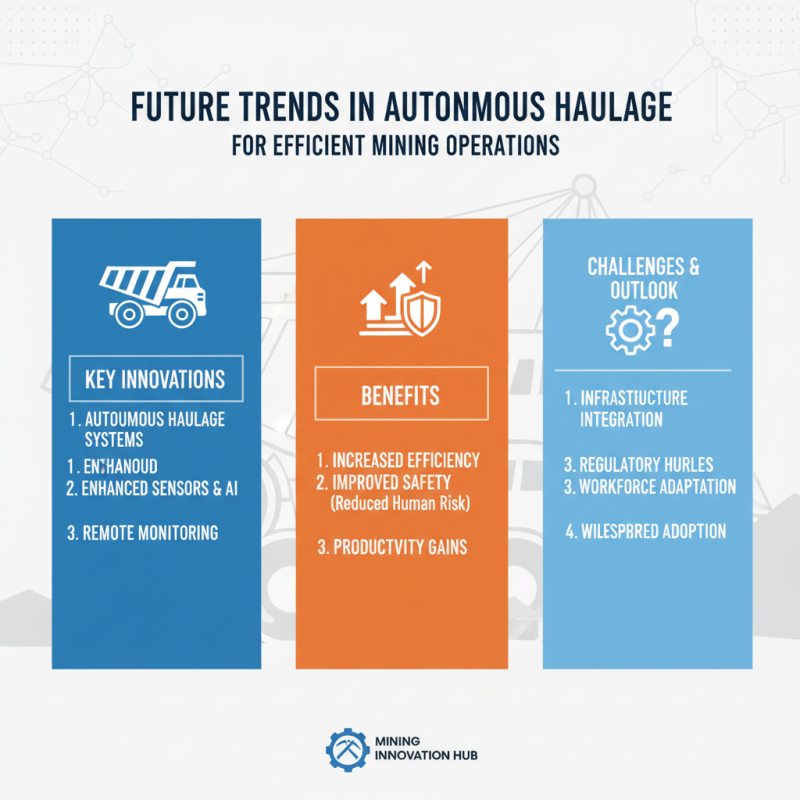
The landscape of mining operations is undergoing significant changes. Autonomous haulage systems are gaining traction. These innovations promise not only to increase efficiency but also to enhance safety in mining environments. However, challenges remain in their widespread adoption.
Future trends indicate advancements in machine learning and artificial intelligence will play crucial roles. They can optimize routing and improve decision-making processes. Real-time data analytics will help in monitoring equipment performance. Yet, integration with existing systems can be complex. The mining industry must navigate these hurdles to fully embrace technology.
Furthermore, as the mining sector moves towards sustainability, autonomous systems can reduce carbon footprints. More efficient operations may lead to less energy consumption. However, this transition requires strong collaboration among stakeholders. Training and upskilling workers is essential in adapting to this evolving landscape. Overall, while the potential is vast, careful consideration of these factors is critical for a successful transformation.