What is the Largest Mining Dump Truck in the World?
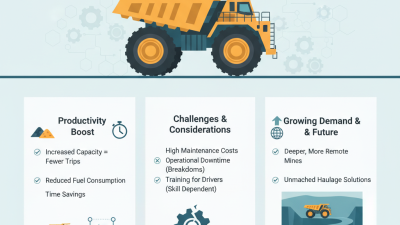
In the world of heavy machinery, the "Largest Mining Dump Truck" holds a significant place. These colossal vehicles are crucial for mining operations. With impressive capacities, they transport vast amounts of material. According to industry expert Dr. Richard Helms, "The scale of these trucks reflects the growing demands of mining resources." This sentiment underscores how the Largest Mining Dump Truck has evolved alongside technological advancements.
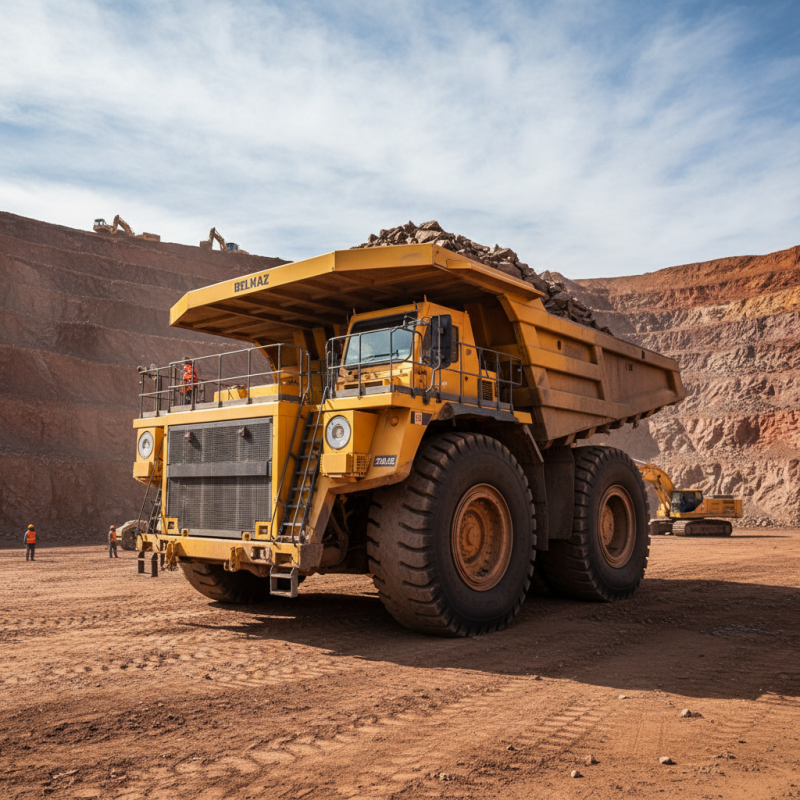
These trucks, like the BelAZ 75710, can carry over 450 tons of material. Such immense capabilities are vital in open-pit mining. However, the sheer size brings challenges. Transporting and maneuvering these trucks requires extensive planning and coordination. Operators must be skilled and aware of the risks. Heavy machinery can fail, leading to costly downtime.
The Largest Mining Dump Truck serves a critical role but also invites scrutiny. As they grow larger, is it sustainable? Environmental impacts remain a concern. Challenges continue to emerge as they push boundaries in design and efficiency. Addressing these issues is part of the ongoing conversation in the mining industry. The future of these giants relies on innovation and responsibility.
Overview of Mining Dump Trucks
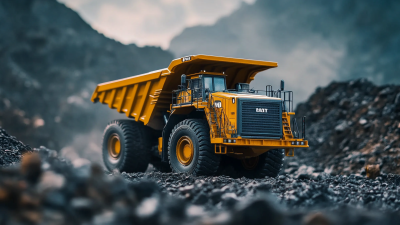
Mining dump trucks play a crucial role in the extraction industry. They are designed to transport large quantities of materials from mining sites. These trucks are massive, often weighing over 500 tons when fully loaded. Their capacity can exceed 400 tons, allowing companies to move a substantial amount of ore in one trip.
The design of mining dump trucks emphasizes durability and power. They operate in some of the harshest environments. This includes extreme temperatures and rugged terrains. Operators rely on these trucks to maintain efficiency under challenging conditions. Safety is also a concern, as these vehicles can cause significant damage if not handled properly.
Despite their impressive capabilities, there are areas for improvement. Fuel efficiency remains a critical concern. Many trucks consume vast amounts of diesel, contributing to operational costs and environmental impact. Innovations in electric and hybrid models promise to address this issue. However, the transition to more sustainable options is still ongoing, requiring further research and development to achieve optimal performance.
History of Dump Truck Development
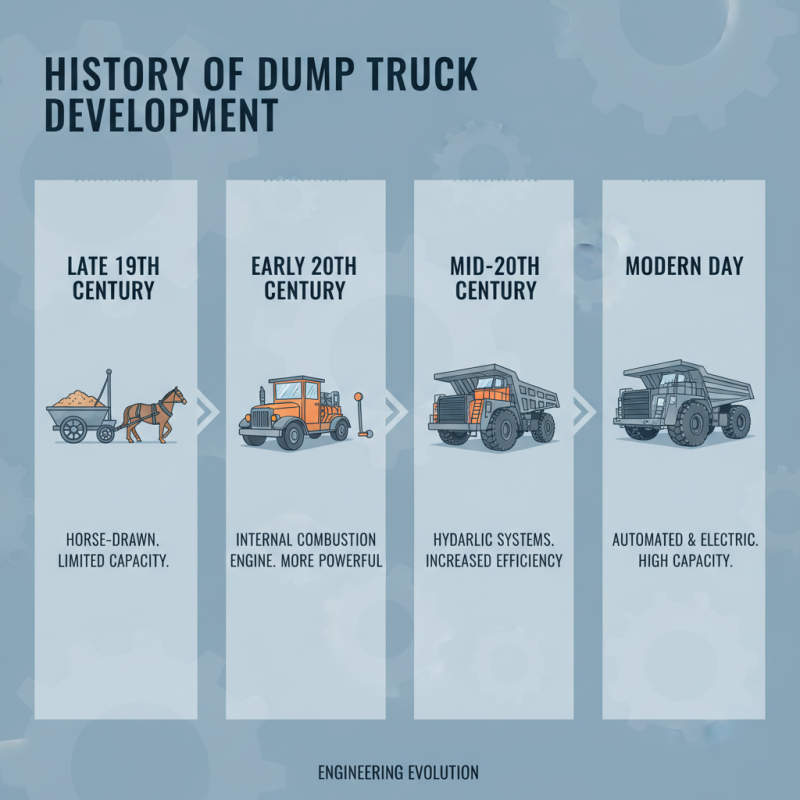
The evolution of dump trucks has been a fascinating journey in engineering. Dump trucks, essential for transporting bulk materials, have evolved significantly since their inception in the late 19th century. Initially, they were horse-drawn and limited in capacity. With the advent of internal combustion engines in the early 20th century, trucks became more powerful and efficient.
Advancements in technology have played a key role in their development. Hydraulic systems emerged, enabling larger loads and quicker unload times. The introduction of electric motors in the late 20th century further enhanced efficiency, allowing for quieter operations. However, this evolution has not been without challenges. Environmental concerns and the push for more sustainable practices have forced manufacturers to rethink designs and energy sources.
Today, mining dump trucks are behemoths, capable of carrying enormous payloads. Yet, their size raises questions about safety and operational efficiency. Each innovation carries potential drawbacks that require careful consideration. As the industry continues to grow, the balance between power and responsibility remains a central theme in dump truck development.
Key Features of the Largest Mining Dump Trucks
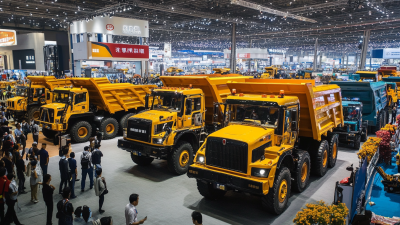
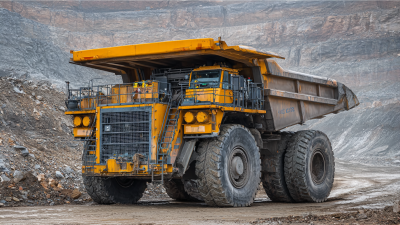
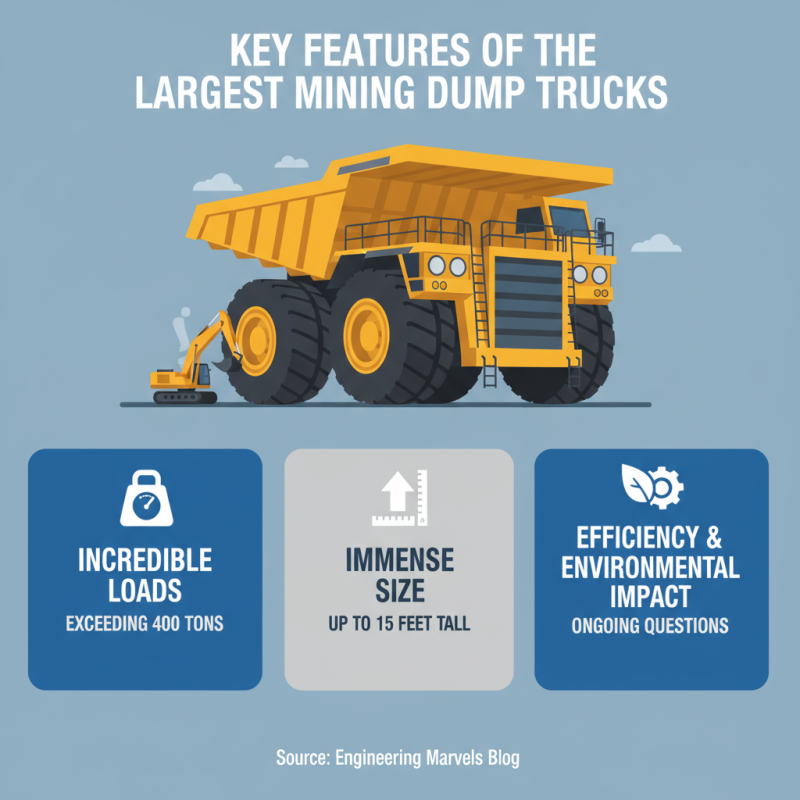
The largest mining dump trucks are marvels of engineering. These trucks can carry incredible loads, often exceeding 400 tons. Their immense size is impressive, yet it raises questions about efficiency and environmental impact. Some models reach a height of nearly 15 feet, making them towering giants on the mining site.
Key features of these massive trucks include powerful engines, often exceeding 4,000 horsepower. This strength enables them to navigate rugged terrain. The tires alone can weigh over 5 tons and measure more than 13 feet in diameter. This scale helps them handle the heavy loads they transport daily. Advanced braking systems are crucial, as these trucks need to stop safely while fully loaded.
These trucks also incorporate technological innovations. Automation is becoming more common, with some having remote operation capabilities. However, the reliance on technology raises concerns about safety and job displacement. Regular maintenance is necessary, as wear and tear can significantly impact performance. The cost of ownership is high, prompting operators to reflect on their investment.
Comparison of Major Mining Dump Truck Models
When discussing mining dump trucks, several models stand out in size and capability. These trucks play a crucial role in transporting materials across vast mining sites. The largest models can carry more than 400 tons in a single load, showcasing impressive engineering and design. The operating weight alone can exceed 1 million pounds. This immense scale is necessary for meeting the demands of modern mining operations.
Tips: When choosing a model, consider factors like terrain, load capacity, and fuel efficiency. Each site has unique needs that can affect performance. Also, always check the service history of any equipment. Regular maintenance is crucial for operational reliability.
The key difference among major models lies in their engine power and body design. Some focus on enhanced aerodynamics to improve fuel efficiency. Others prioritize strength for heavy-duty tasks. Not all models excel at every job. Each design has trade-offs that may not suit every mining operation. Operators should evaluate their specific requirements carefully. Test runs can provide valuable insights into a truck's performance on-site.
What is the Largest Mining Dump Truck in the World? - Comparison of Major Mining Dump Truck Models
| Model |
Load Capacity (tons) |
Engine Power (HP) |
Operating Weight (tons) |
Dump Body Volume (m³) |
| Model A |
400 |
2000 |
600 |
24 |
| Model B |
450 |
2200 |
650 |
25 |
| Model C |
500 |
2500 |
700 |
26 |
| Model D |
550 |
2700 |
800 |
27 |
| Model E |
600 |
3000 |
900 |
28 |
Future Innovations in Mining Dump Truck Technology
The future of mining dump trucks is set to transform the industry. Innovations in technology are emerging at a rapid pace. Electric and hybrid engines promise reduced emissions. These advancements aim for sustainability in operations. Lower fuel costs could reshape project budgets. Autonomous capabilities are another exciting frontier. Self-driving trucks can enhance safety and efficiency.
Data analytics is being integrated into these vehicles. This means real-time monitoring of performance and health. Predictive maintenance can prevent costly downtimes. However, these innovations come with challenges. High initial costs and the need for skilled operators pose obstacles. Regulations may lag behind new technologies, causing delays.
Incorporating artificial intelligence can improve decision-making processes. AI can analyze vast amounts of data quickly. Yet, the reliance on technology also raises questions. How much should we trust machines with critical tasks? As the industry evolves, these dilemmas will need addressing. Balancing innovation with practicality will be crucial for success.
Largest Mining Dump Trucks by Payload Capacity