How to Choose the Right Mining Transport Vehicles for Your Operations?
Choosing the right Mining Transport Vehicles is critical for operational efficiency and safety in mining industries. According to a report by Global Mining Review, improper vehicle selection can lead to delays and increased costs. In fact, the mining sector faces up to 20% operational inefficiency due to inadequate transport solutions. Industry experts emphasize the importance of matching vehicles to specific mining needs.
Dr. Emily Thompson, a leading figure in mining logistics, states, "The right transport vehicles can transform site productivity." This highlights the vital role that Mining Transport Vehicles play in the overall operational framework. Many companies overlook vehicle adaptability and payload capacity, impacting their performance.
It’s common for firms to choose vehicles based on initial costs rather than total operational efficiency. This short-sighted approach can lead to resource wastage. Investing time in analyzing the specific needs and characteristics of a mining site can yield better results. In the competitive mining landscape, making informed vehicle choices can significantly affect both safety and profitability.

Identifying the Specific Mining Operations Needs
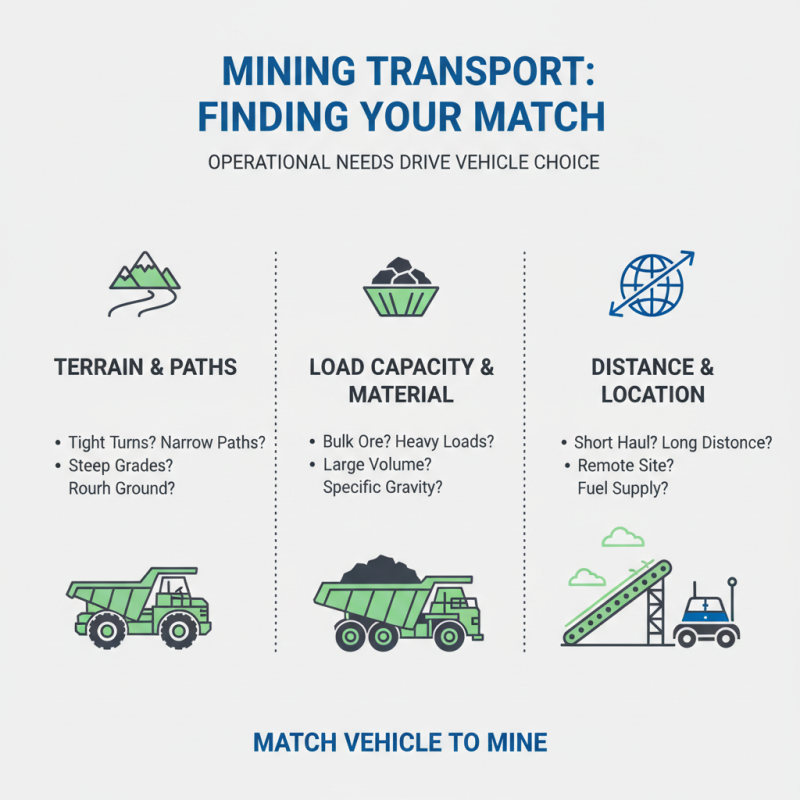
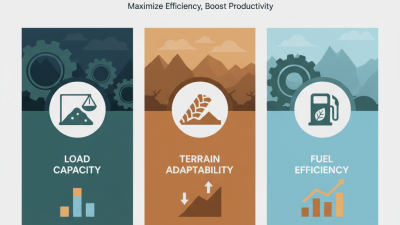
Choosing the right mining transport vehicles begins with understanding your specific operational needs. Different mining sites have unique challenges, influencing vehicle selection. Consider factors like terrain, load capacity, and distance. Is your operation in a remote location? Larger vehicles may not be suitable for tight paths.
Next, assess the materials you will transport. Heavy ore requires robust vehicles with high torque and durability. Additionally, think about fuel efficiency and maintenance needs. Cost-effective solutions can be less beneficial if they require frequent repairs. Sometimes, it’s crucial to balance initial costs with long-term reliability.
Lastly, involve your operators in the decision-making process. They can provide insights on practical requirements based on daily experiences. Their feedback will highlight the vehicles’ performance in real situations. Investing time in this phase can prevent potential setbacks later. Reflecting on past experiences can also guide you toward a better choice.
Evaluating Different Types of Mining Transport Vehicles
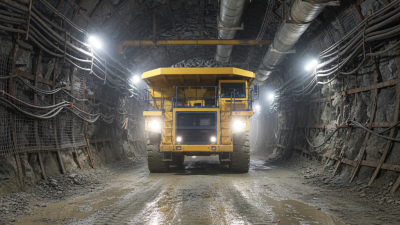
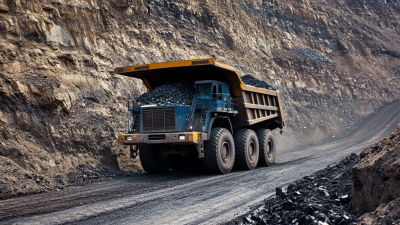
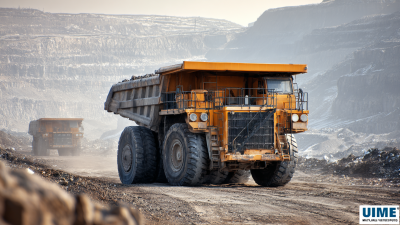
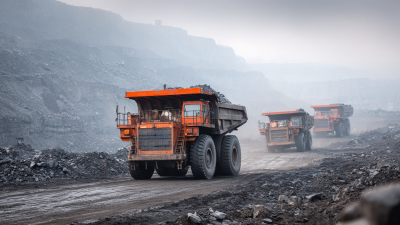
Choosing the right mining transport vehicles is crucial. The type of vehicle you select impacts productivity and safety. Different mining environments require different vehicles. For instance, underground mines may benefit from smaller, more maneuverable vehicles. In contrast, open-pit operations often need larger trucks for heavy loads.
Consider vehicle capacity, durability, and terrain suitability. Some vehicles are better on rough terrain. Others excel in carrying lighter, bulk materials. Look at maintenance requirements too. A vehicle that is hard to maintain can become a liability. Regular downtime for repairs can disrupt your operations. Ask for feedback from your team about their preferences and needs. They work with these vehicles daily and can provide valuable insights.
Evaluate the total cost of ownership. It’s not just about initial purchase price. Fuel efficiency, repair costs, and downtime all add up. Sometimes a cheaper vehicle may incur higher maintenance costs. It's essential to reflect on past experiences with various transport options. Did they meet expectations? Were they efficient? These reflections will guide better decisions in the future.
How to Choose the Right Mining Transport Vehicles for Your Operations? - Evaluating Different Types of Mining Transport Vehicles
| Vehicle Type |
Payload Capacity (tons) |
Fuel Efficiency (mpg) |
Operational Cost ($/hour) |
Terrain Capability |
| Articulated Dump Truck |
30 |
5 |
150 |
Rugged, Off-road |
| Rigid Dump Truck |
50 |
4 |
180 |
Mixed, Heavy-duty |
| Underground Loader |
20 |
3 |
200 |
Underground |
| haul Truck |
100 |
2.5 |
300 |
Open-pit |
| Pick-up Truck |
1.5 |
20 |
80 |
All-terrain |
Assessing Vehicle Performance and Durability Factors
When selecting mining transport vehicles, performance and durability are critical. A report from the Mining Equipment Manufacturers Association highlights that operational downtime can cost up to $1 million per hour. Thus, choosing a vehicle with robust performance features ensures continuous operations.
Factors affecting vehicle durability include material quality and design. Vehicles made from high-strength steel can withstand harsh environments. According to industry studies, vehicles with a lower weight-to-strength ratio tend to last longer in rugged terrains. Additionally, maintenance schedules play a vital role in longevity. Frequent checks can identify wear and tear early, extending vehicle life.
However, the industry's reliance on specific metrics can be misleading. Some vehicles may perform well based on tests but underperform in real-world conditions. End-users should share their experiences to refine performance benchmarks. Gathering insights from operators can reveal how vehicles respond to unplanned challenges. This feedback loop enhances future vehicle choices.
Performance Comparison of Mining Transport Vehicles
Considering Environmental and Safety Regulations
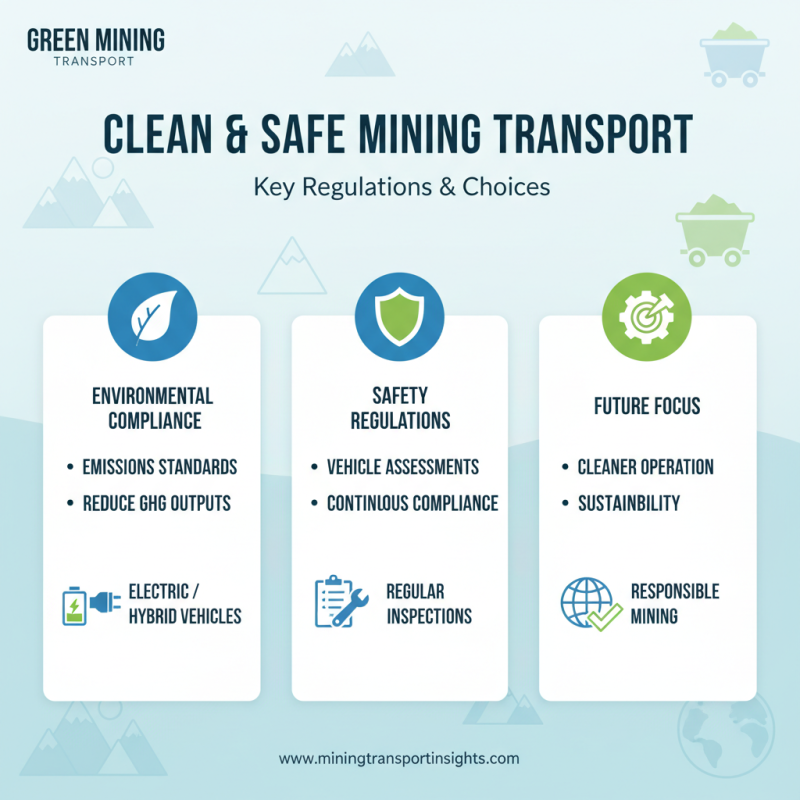
When selecting mining transport vehicles, environmental and safety regulations should be at the forefront. These vehicles must comply with emissions standards to ensure cleaner operation. Consider electric or hybrid options, which can significantly reduce greenhouse gas outputs. Regular assessments of these vehicles are essential to ensure compliance over time.
Safety features also matter. Look for vehicles equipped with advanced braking systems and visibility enhancements. This helps prevent accidents, protecting workers and equipment. Using vehicles designed to navigate rough terrain reduces risks associated with difficult mining environments. However, implementing these measures can sometimes be costly and complex.
Monitoring fuel efficiency is another important aspect. Not only does it lower operating costs, but it also minimizes environmental impact. Choosing vehicles that utilize alternative fuels can sometimes lead to unexpected challenges. Adaptation to new technologies requires training and may cause temporary disruptions. Balancing efficiency with safety and environmental regulations is an ongoing process.
Calculating Budget and Cost-Effectiveness of Vehicles
When selecting mining transport vehicles,
budget becomes a vital consideration. The total cost of ownership
can vary significantly. Data from industry reports suggest that
upfront costs often account
for just 30% of the overall expenditure over the vehicle's lifespan.
Maintenance and operational costs can easily surpass initial investments.
Therefore, it is essential to calculate these ongoing expenses in detail.
Consider the cost-effectiveness of specialized vehicles. Electric options
tend to have lower operating costs due to reduced fuel expenses. However,
they may have higher initial procurement prices. A study indicated that while
electric vehicles can reduce costs by up to 60% over time,
the initial investment can be deterring for companies looking to
balance budgets. It's also crucial to consider the terrain
where the vehicles will operate. Harsh environments may lead to increased
wear and tear, complicating budget forecasts.
Ignoring the total cost of ownership
can lead to poor decisions. Using outdated models without technology upgrades
could be a short-term saving, but long-term expenses may skyrocket due to
inefficiencies. Companies should conduct regular assessments of their fleet's
performance and maintenance costs. These evaluations often reveal the need
for adjustments. Outdated vehicles should not remain in service longer than necessary.