How to Choose the Best Underground Haul Truck for Your Mining Operations?
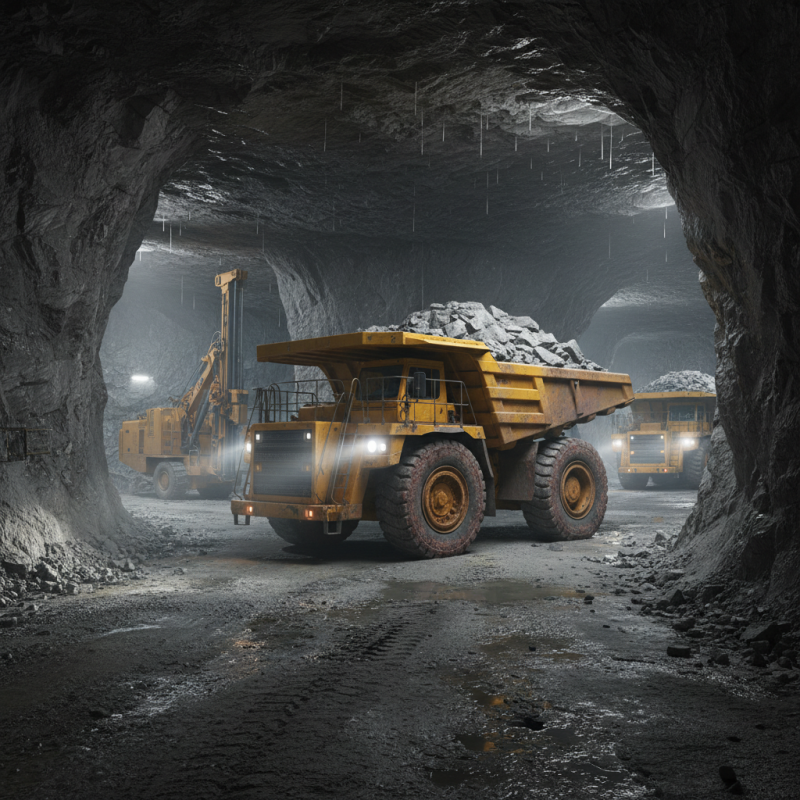
Choosing the right Underground Haul Truck is crucial for efficient mining operations. These trucks play a vital role in transporting materials in confined spaces. The selection process requires careful consideration of several factors.
Factors like load capacity, durability, and maneuverability should be evaluated. An ideal truck must navigate tight spots while carrying heavy loads. It should also withstand harsh environments typical in mining.
Reflect on the challenges your operation faces. Analyze past experiences with existing trucks. Are there areas for improvement? Identifying these aspects can streamline your decision-making process. Choosing the best Underground Haul Truck may not be straightforward, but it is essential for operational success.
Understanding the Role of Underground Haul Trucks in Mining Operations
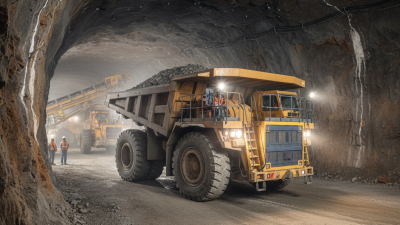
Underground haul trucks play a vital role in mining operations. These vehicles transport materials efficiently through narrow tunnels. Their size and design must adapt to the constraints of underground environments. Operators rely on these trucks to ensure timely delivery of ore and waste.
Selecting the right truck requires understanding specific mining conditions. For instance, steep gradients challenge truck design and performance. Some trucks may struggle with load capacity, affecting productivity. Assessing the terrain and logistics helps minimize accidents and increase operational efficiency.
Maintenance considerations are equally important. A well-maintained truck reduces downtime and enhances safety. However, some operators overlook routine checks, leading to unexpected failures. Balancing cost and performance is essential for long-term success in mining operations. Each choice reflects a commitment to efficiency and safety.
Key Features to Consider When Selecting an Underground Haul Truck
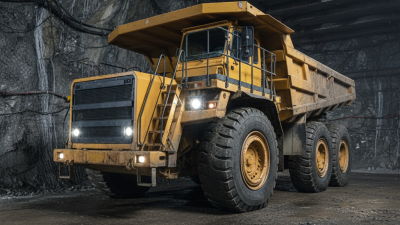
Choosing the right underground haul truck is crucial for efficient mining operations. Several key features can determine the performance and reliability of the vehicle. Pay attention to the truck's weight capacity. Depending on your mine's requirements, trucks come with various load options. Selecting a truck with appropriate capacity helps avoid repeated trips, saving time and fuel.
Another important aspect is the truck's maneuverability. Underground mines often have narrow paths and challenging terrains. A truck with a compact design and good turning radius can navigate these spaces effectively. Ensure that the truck has features like articulated steering. This can significantly enhance its ability to handle tight corners.
Consider the maintenance requirements as well. Ideally, you want a truck that allows easy access for repairs. Trucks with complex mechanics may lead to increased downtime. Look for models with user-friendly maintenance features. This allows your team to conduct repairs quickly. Reflect on your operational needs and choose a truck that balances capacity, maneuverability, and maintainability.
Evaluating Load Capacity and Size for Efficient Mining Transport
Choosing the right underground haul truck is crucial for successful mining operations. Load capacity plays a significant role in this decision. A truck with too low a capacity can lead to multiple trips, wasting time and increasing costs. Conversely, an oversized truck can navigate poorly in tight spaces. Finding a balance is essential.
The size of the haul truck also impacts efficiency. It needs to fit in the tunnel dimensions. If a truck is too wide, it may not be able to maneuver effectively. Operators should measure tunnel width and height before choosing a model. In some cases, a smaller truck might be more efficient, even if it seems counterintuitive.
Think about the terrain your truck will cover. Steep inclines or uneven surfaces require different power and stability features. Not all trucks are equipped for the challenges of harsh environments. An optimal choice reflects not just on the specs but also on real-world scenarios. Sometimes, what looks good on paper may not work in practice. Test driving options in your unique conditions can reveal unforeseen drawbacks.
Load Capacity and Size Comparison of Underground Haul Trucks
Assessing Operating Costs and Maintenance Requirements
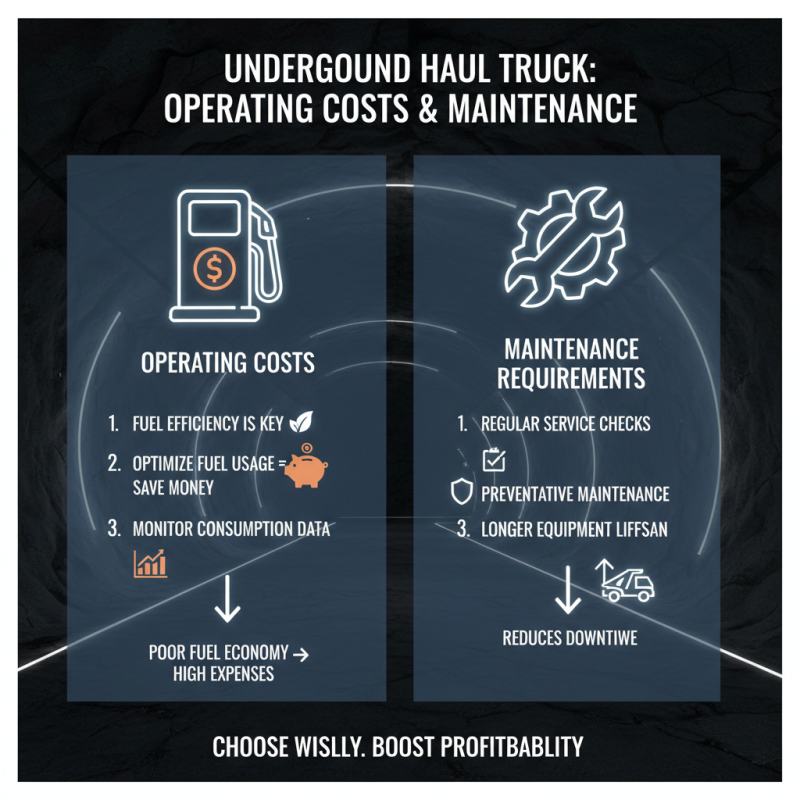
When selecting an underground haul truck, understanding operating costs is critical. Fuel efficiency plays a significant role in these costs. Choose a truck that maximizes fuel usage without sacrificing performance. Poor fuel economy can quickly add up over time, affecting your bottom line. Regularly analyzing fuel consumption data can help in making adjustments.
Maintenance is another vital factor. Trucks require routine maintenance to remain operational. Neglecting this can lead to unexpected downtime, which is costly. Simple tasks, like checking fluid levels and inspecting tires, should not be overlooked. Create a maintenance schedule to ensure that all components are in good condition. Unexpected repairs can derail your operations.
Lastly, consider the availability of parts and service. Trucks that are easier to service will save time and costs. A truck may have a lower initial price, but expensive repairs can quickly negate those savings. Research the long-term implications of a truck's design and the service network available. Avoid choosing based solely on upfront costs; think about the entire lifecycle of the vehicle for a sustainable choice.
Comparing Different Manufacturers and Models of Haul Trucks
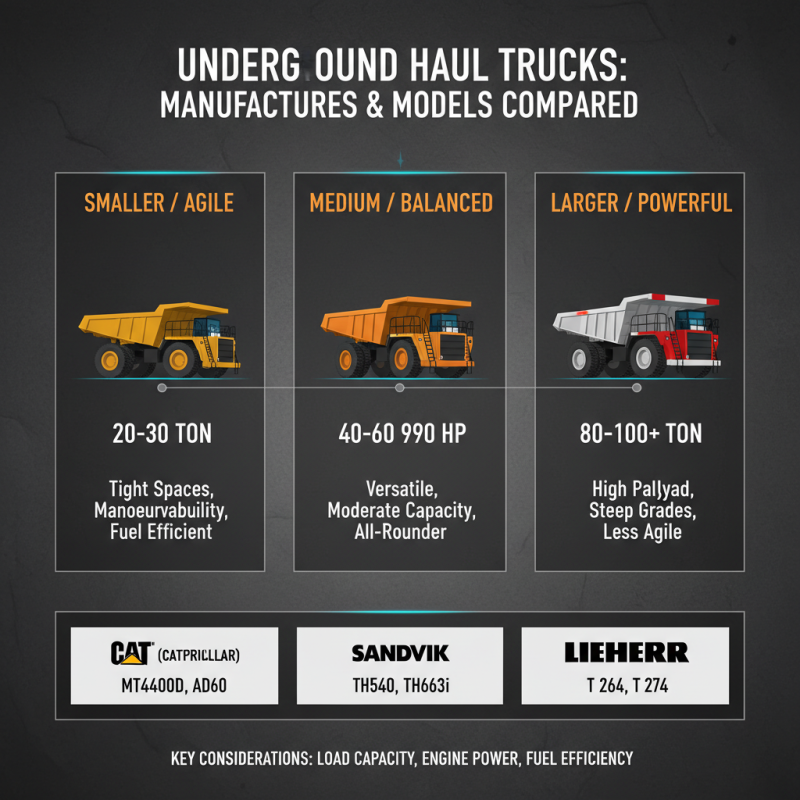
When choosing the best underground haul truck for mining operations, consider various manufacturers and models. Each truck has unique features tailored to specific tasks. For instance, look at load capacity, engine power, and fuel efficiency. Trucks vary significantly in size. Smaller models may be more agile but less powerful, while larger trucks can carry more but may struggle in tight spaces.
Another important aspect is maintenance. Some models require frequent servicing, which can interrupt operations. Conversely, trucks designed for easy maintenance can reduce downtime. Review customer feedback on reliability. Many users share experiences that can guide decisions. Look for long-term performance metrics, as initial cost doesn't always reflect total value over time.
Don’t overlook operator comfort and safety. Cab design, visibility, and ergonomics play a crucial role. A comfortable operator is more productive and less prone to errors. Test drive different models, if possible. This hands-on experience can reveal limitations or advantages not evident on paper. Make informed comparisons to find a suitable fit for your needs.