Best Gold Mining Trucks for Maximum Efficiency in 2026?
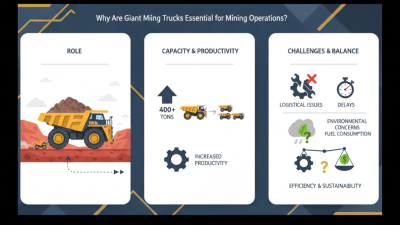
In the ever-evolving world of gold mining, efficiency is paramount. Gold mining trucks play a crucial role in this sector. As reported by the International Council on Mining and Metals, optimizing heavy-duty vehicles can reduce operating costs by up to 30%. These trucks are essential for transporting gold ore from remote sites to processing facilities.
Current trends suggest that automation is becoming increasingly prevalent in truck design. This shift aims to enhance productivity while minimizing labor costs. However, there's a catch. High initial investment costs can deter some mining companies from upgrading their fleets. Balancing the upfront expense with potential long-term savings remains a challenge.
Additionally, environmental regulations are tightening. Mining companies must now consider eco-friendly alternatives. This can lead to conflicts between efficiency and sustainability. The search for the best gold mining trucks for 2026 will need to focus on innovative designs that meet these dual demands. The future calls for smarter solutions in an industry grappling with complex realities.
Best Gold Mining Trucks Overview: Importance and Evolution
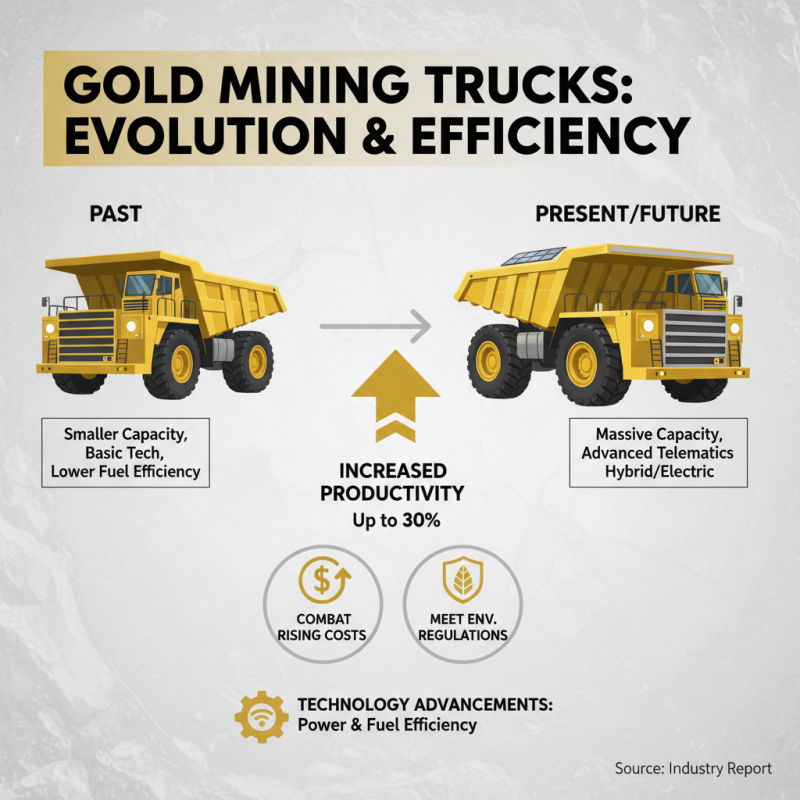
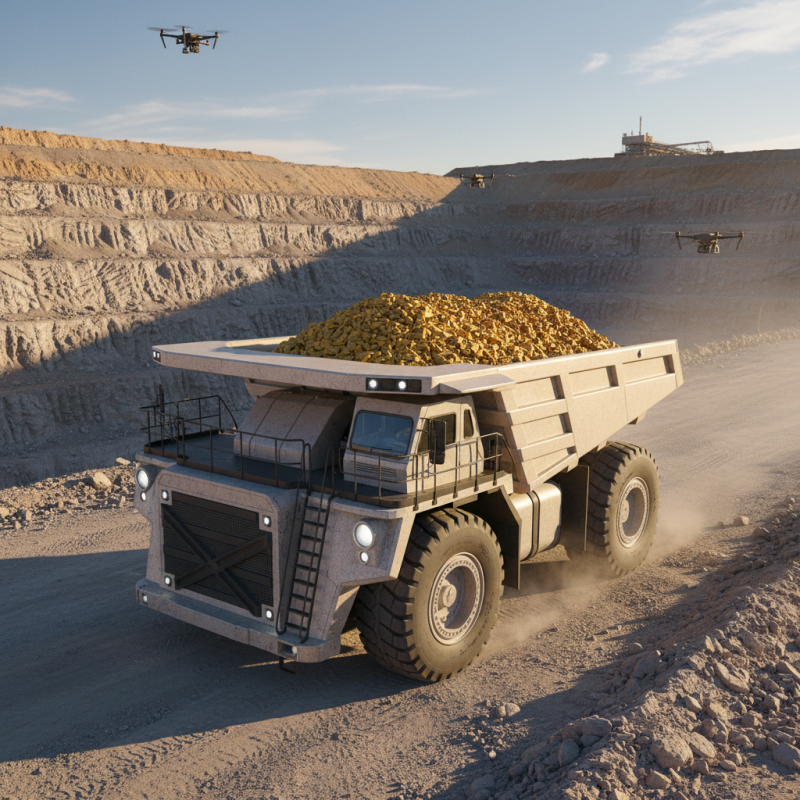
The evolution of gold mining trucks is pivotal in maximizing efficiency. With advancements in technology, these trucks are more powerful and fuel-efficient. According to a recent industry report, modern trucks can increase productivity by up to 30%. This is crucial as mining companies face rising costs and strict environmental regulations.
When considering the importance of these vehicles, durability and payload capacity are key. In the past, trucks often encountered breakdowns, delaying operations. Today’s trucks are designed to minimize maintenance and enhance performance. They can carry heavier loads, reducing the number of trips needed. This results in lower operational costs and improved output.
**Tip:** Regular maintenance checks can significantly extend the lifespan of your mining trucks. Monitor tire pressure and fluid levels regularly.
Additionally, the safety features in newer models have evolved. Improved braking systems and better visibility are essential for operator safety. Some trucks now include automated systems to assist in navigation and obstacle detection. However, reliance on technology might lead to complacency among operators. Continuous training is important for optimal performance.
**Tip:** Invest in operator training programs to maximize the use of new technologies. A skilled operator can make all the difference.
Key Features of Efficient Gold Mining Trucks for 2026
In 2026, the demands on gold mining trucks will evolve significantly. Adopting advanced features can greatly enhance efficiency. Modern trucks must prioritize fuel efficiency. According to industry reports, vehicles optimized for fuel can improve delivery by 20%. Minimizing operational costs is key for profit margins in this competitive field.
Durability is vital in choosing the right truck. Mining conditions can be harsh, leading to wear and tear. Trucks with reinforced structures endure heavy loads and rough terrain. Additionally, advanced safety features protect operators. Trucks with real-time monitoring systems minimize risks and prevent accidents. Proper monitoring also extends the lifespan of the vehicles.
**Tip:** Regular maintenance checks extend the truck's life. Ensuring timely repairs can prevent minor issues from becoming major problems.
Consider load capacity too. Trucks designed to carry heavier loads can reduce trips. This directly saves time and fuel. However, it's essential to balance capacity with efficiency. Overloading can decrease performance and increase breakdowns. Always reflect on operational practices to find better solutions. Balancing cost with capability remains a challenge that requires constant assessment.
Best Gold Mining Trucks for Maximum Efficiency in 2026
This chart compares the payload capacity, fuel efficiency, and maintenance cost of various gold mining trucks expected in 2026, highlighting their features for improved efficiency.
Top Gold Mining Truck Models: Performance and Capacity Comparison
The efficiency of gold mining trucks is crucial for optimal operations in 2026. A recent industry report indicates that trucks equipped with advanced hauling technology can improve payload capacity by up to 30%. High-capacity trucks dominate the mining sector, handling loads exceeding 200 tons per trip. However, not all models meet the rigorous demands of rugged terrain.
When comparing models, the focus should be on performance and fuel efficiency. Many trucks today offer better fuel consumption rates, averaging 7 gallons per hour while hauling heavy loads. Yet, some older models still in service struggle with higher fuel costs, leading to increased operational expenses.
Maintenance can also be a challenge. Frequent breakdowns are common in trucks operating in harsh environments. This affects overall productivity and contributes to costly downtime. Mining companies must evaluate each model's reliability to ensure uninterrupted operations. Investing in new technology might seem expensive, but the long-term savings can be significant. Ultimately, a deeper understanding of truck performance factors is vital for making informed decisions.
Technological Innovations in Gold Mining Trucks for Enhanced Efficiency
The future of gold mining trucks relies heavily on technological innovations that enhance efficiency. Reports indicate that automation in mining vehicles can increase productivity by up to 30%. Automated trucks can operate continuously, reducing downtime and labor costs. Sensors and GPS technologies allow precise navigation in rugged terrains, which improves safety and efficiency.
One interesting trend is the use of electric and hybrid trucks. These vehicles promise lower emissions and reduced fuel costs. A study by the International Council on Mining and Metals shows that transitioning to electric options could cut operational costs by 20%. Yet, the high initial investment remains a barrier for many miners.
Tip: Consider the total cost of ownership when choosing mining trucks. Evaluate not just the purchase price but also maintenance and fuel efficiency.
Additionally, integrating real-time data analytics can enhance decision-making. By analyzing performance metrics, companies can identify inefficiencies. However, the complexity of this technology may pose challenges for some operations. Training staff to manage these innovations is essential for maximizing their benefits.
Tip: Invest in training programs to ensure workers can adapt to new technologies effectively. Proper training can lead to safer and more productive work environments.
Environmental Considerations in Choosing Gold Mining Trucks in 2026
In 2026, the choice of gold mining trucks involves significant environmental considerations. The mining industry faces increasing pressure to reduce its carbon footprint. A report from the International Council on Mining and Metals (ICMM) suggests that mining operations could cut their emissions by 30% by investing in more efficient trucks.
Efficiency goes beyond fuel usage. Electric and hybrid trucks are gaining attention. They not only reduce emissions but also lower operating costs. According to a 2023 study by the Global Mining Guidelines Group, companies that adopted electric trucks saw a 15% decrease in total operational expenses. This trend indicates a shift toward sustainability, which may be crucial for regulatory compliance in 2026.
Tips: When selecting trucks, consider their emissions ratings. Also, evaluate total lifecycle costs, not just initial purchase prices. Assess the infrastructure available for maintenance and charging. Focus on balancing efficiency and environmental impact. Many companies are still hesitant to make the switch. However, this is a missed opportunity. Embracing these new technologies can lead to significant long-term profits.